

 English
 Русский
 Turkish
 Português (Brasil)
 한국어
한국어 العربية
 Español
 ไทย
ไทย Tiếng Việt
 Français
 中文
中文 Deutsch
 Bahasa Indonesia
 Italiano
 日本語
日本語 Українська
 فارسی
فارسی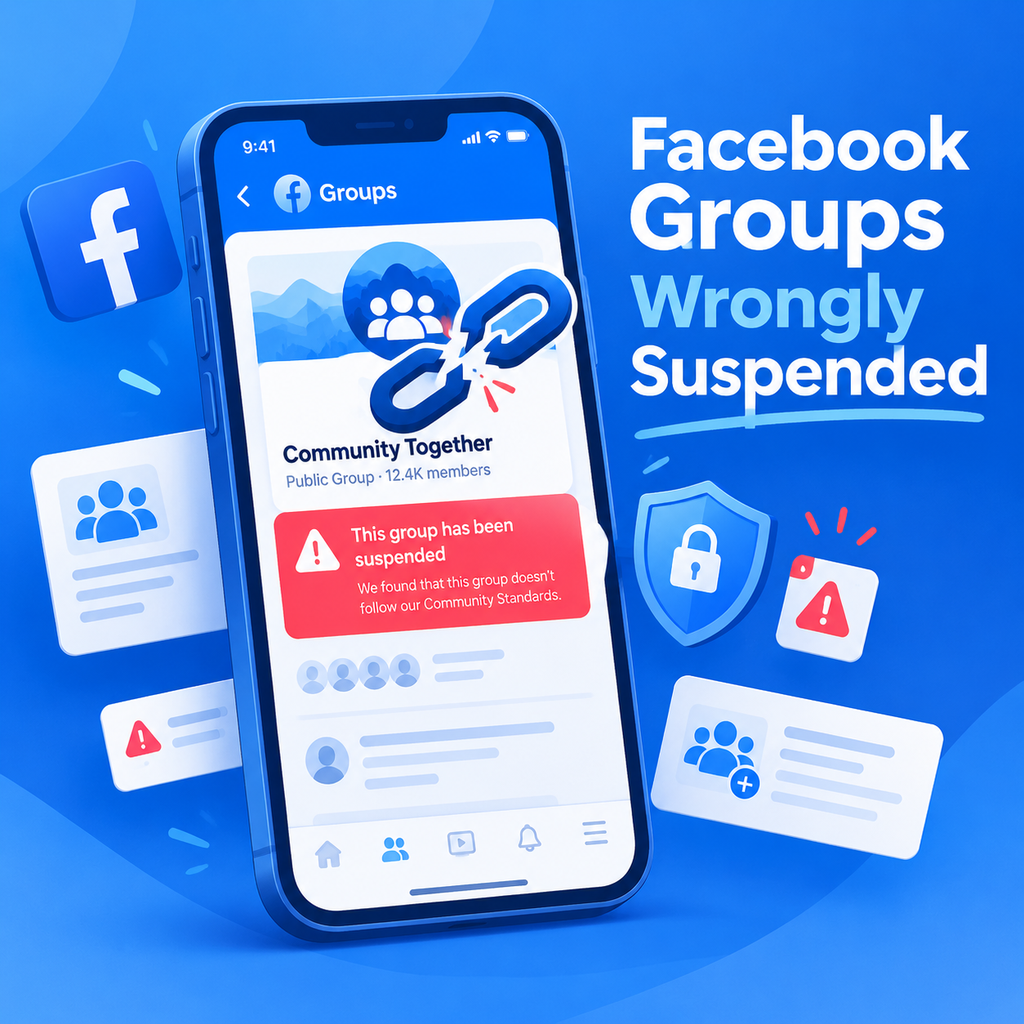
Meta's admission: a technical error behind wrongful suspensions
In a rare acknowledgment, Meta has admitted that a technical error led to the wrongful suspension of numerous Facebook Groups. The company says it is actively working to fix the problem, which resulted in groups being incorrectly flagged for policy violations. According to Meta, the issue was not widespread but rather isolated to a specific technical glitch. However, this admission has sparked a wave of complaints from users who claim their accounts and groups were unfairly targeted. The incident highlights the challenges of relying on automated systems to enforce community standards, especially when errors can have significant consequences for group administrators and members.
Meta's statement emphasized that it uses a combination of people and technology to moderate content, and that users can appeal decisions they believe are mistakes. Yet, for many affected admins, the appeals process proved frustrating and slow. One group with over 680,000 members was told it violated standards on "dangerous organizations or individuals" before being restored. Another admin of a 3.5 million-member AI group reported that both his group and personal account were suspended for hours, with Meta later admitting, "Our technology made a mistake suspending your group." These cases underscore the real-world impact of automated enforcement errors.
The scope of the problem: isolated incident or systemic issue?
While Meta insists the wrongful suspensions were limited to a technical error affecting Facebook Groups, many users and observers are not convinced. In online forums and on Reddit, administrators have shared similar stories of erroneous bans across Facebook, Instagram, and even WhatsApp. A petition circulating online has garnered over 25,000 signatures, accusing Meta of falsely banning accounts and demanding greater transparency. Critics argue that the problem is not confined to Groups but extends to personal profiles, business accounts, and pages. Meta, however, denies any spike in erroneous account suspensions platform-wide.
The discrepancy between Meta's official stance and user experiences raises questions about the effectiveness of its moderation systems. If the error was truly isolated, why are so many users reporting similar issues? Some speculate that the rise in automated moderation during the pandemic has led to overzealous enforcement. Others point to the complexity of Meta's policies, which can be difficult for both users and AI to interpret correctly. Regardless of the cause, the situation has eroded trust among some users who rely on Meta's platforms for their livelihoods and communities.
Case studies: when automation gets it wrong
Several high-profile cases illustrate the consequences of Meta's moderation errors. A group dedicated to sharing memes about bugs was removed for allegedly violating standards on "dangerous organizations or individuals"—a baffling decision that was later reversed. The admin of an AI-focused group with millions of members faced suspension of both his group and personal account, only to be told it was a mistake. These examples show that even large, established groups are not immune to automated errors.
Business owners have also been affected. Two Nottingham-based businesses, Sanctum Tattoo Studio and Pretty Pigment, had their accounts flagged as "misleading, fraud or scam" by Meta's AI, rendering them inaccessible to customers. Despite appeals, they struggled to get clear explanations or timely resolutions. One owner, Charmaine Shinner, was locked out of her Facebook account for a week after posting a picture of tattooed eyebrows. Her repeated appeals eventually led to reinstatement, but the ordeal caused unnecessary stress and lost business. Such stories highlight the human toll of algorithmic mistakes.
Meta's response and the appeals process
Meta maintains that it takes action against accounts that violate its policies and that users can appeal if they believe a mistake has been made. The company says it is not aware of a spike in erroneous suspensions and continues to use a mix of human review and automation to enforce its rules. However, many users report that the appeals process is opaque and slow, often resulting in automated responses rather than meaningful human review. Some have resorted to public shaming on social media or contacting journalists to get their accounts restored.
Meta's lack of detailed communication about the causes of these errors has only fueled frustration. While the company has restored many accounts after media inquiries, it has not provided a comprehensive explanation of what went wrong or how it plans to prevent future occurrences. This has led to calls for greater transparency and accountability, with some users considering legal action. The situation underscores the need for more robust and user-friendly appeal mechanisms, especially when automated systems make high-stakes decisions.
The human impact: beyond inconvenience
For many, a suspended account is more than an inconvenience—it can be a significant disruption. Group admins invest years building communities, and businesses rely on social media for marketing and customer engagement. When accounts are wrongly banned, the consequences can be financial and emotional. The petition signed by thousands reflects a growing unease with Meta's moderation practices. Users feel powerless when faced with automated decisions and inadequate support.
Moreover, the fear of arbitrary bans can lead to self-censorship, chilling free expression. Some users report being wrongly accused of severe violations, such as child sexual exploitation, which carries a heavy stigma. Even after reinstatement, the experience can be traumatic. Meta's pledge to "fix" the technical error is a start, but it does little to address the broader concerns about its moderation systems. As our digital lives become increasingly intertwined with social media, the need for fair and transparent enforcement has never been greater.
Looking ahead: the need for reform
The recent admissions by Meta highlight the challenges of moderating billions of users across multiple platforms. While automation is necessary at scale, it must be balanced with human oversight and clear communication. Meta's denial of a wider problem may be technically accurate in terms of data, but it fails to acknowledge the lived experiences of many users. To rebuild trust, Meta could benefit from publishing regular transparency reports on enforcement errors, investing in better appeal processes, and engaging with user communities to improve policies.
Ultimately, the incident serves as a cautionary tale about the pitfalls of over-reliance on AI for content moderation. As technology evolves, so must the safeguards that protect users from wrongful actions. Meta's willingness to admit a mistake is a positive step, but it must be followed by concrete actions to ensure fairness and accountability. Only then can it hope to maintain the trust of its global user base.