

 English
 Русский
 Turkish
 Português (Brasil)
 한국어
 العربية
 Español
 ไทย
 Tiếng Việt
 Français
 中文
 Deutsch
 Bahasa Indonesia
 日本語
 Polski
 Українська
 فارسی
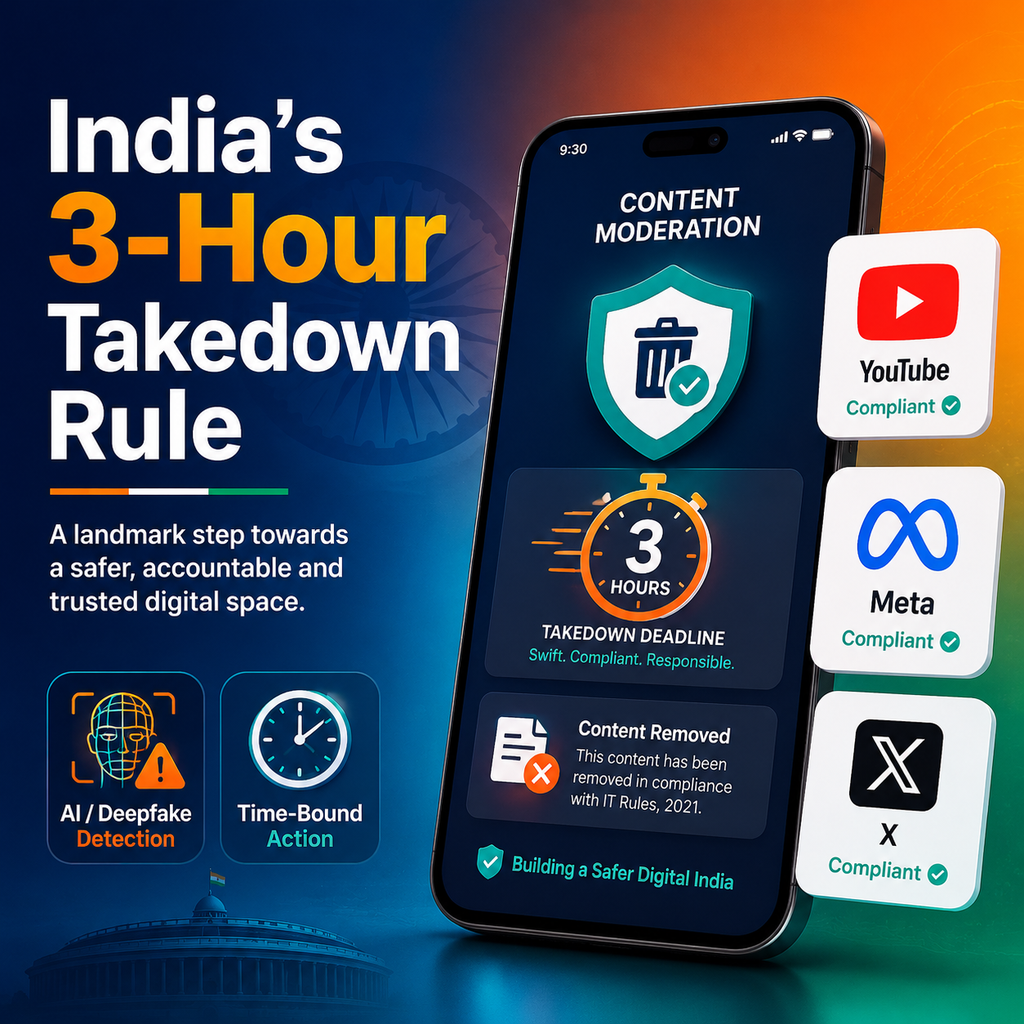
India's New Three-Hour Takedown Rule: A Seismic Shift for Social Media
Starting February 20, social media platforms operating in India will have just three hours to remove content flagged as unlawful by the government—a drastic reduction from the previous 36-hour window. The amended IT rules, notified on February 10, apply to giants like Meta, YouTube, and X, and mark one of the world's most aggressive content moderation regimes. For a market of over a billion internet users, the move signals India's determination to curb the rapid spread of harmful material, but it also raises serious questions about feasibility, free expression, and the future of digital regulation.
From 36 Hours to Three: What Exactly Changed?
The original IT Rules, 2021, gave platforms 36 hours to act on government takedown notices. The new amendment slashes that to three hours, with no public explanation from the government for the compressed timeline. The rules cover a broad spectrum of "unlawful content," including material related to national security, public order, and now, AI-generated deepfakes. Additionally, grievance redressal timelines have been tightened: user complaints must be resolved within seven days (down from 15), and non-consensual intimate imagery (NCII) must be removed within two hours (down from 24). According to government officials, the tightened deadlines are necessary to address the lightning-fast spread of synthetic media that can fuel harassment, sexual abuse, and threats to public order.
A Broader Net for AI Content
For the first time, the rules explicitly define "synthetically generated information"—audio or video created or altered to appear real. Ordinary editing, accessibility features, and genuine educational or design work are excluded. Platforms must now prominently label AI-generated content, embed permanent traceable markers that cannot be removed, and deploy automated tools to detect and prevent illegal synthetic content, including deepfakes, false documents, and child sexual abuse material. The government has framed these measures as essential safeguards against the misuse of generative AI.
Industry Pushback: 'Operationally Challenging'
Tech companies are sounding the alarm. Meta's VP of policy and deputy chief privacy officer, Rob Sherman, said the company is "philosophically aligned" with the safety goals but warned that "operationally, three hours is going to be really challenging." Every government request must be reviewed, investigated, and validated before action—a process that rarely fits into a three-hour window. Industry representatives argue that the February 20 implementation date leaves little time to rewire infrastructure and adapt systems. Akash Karmakar, a technology law partner at Panag & Babu, called the timeline "practically impossible" and noted that it assumes "no application of mind or real world ability to resist compliance." Critics also point out that the rules were introduced without adequate consultation with stakeholders.
The Government's Counter: 'It's Doable, Even Instant'
Despite the pushback, the government remains steadfast. A senior official defended the three-hour deadline, arguing that platforms already take down infringing content within minutes using automated systems, particularly during election periods when directed by the Election Commission of India. "It is possible. In fact, I would say it can be brought lower. It can be done instantly," the official said, drawing a comparison to copyright enforcement. The government also stressed that failure to comply could jeopardize a platform's safe harbour protections under the IT Act, a powerful lever that forces compliance. Industry insiders, however, caution that copyright takedowns benefit from pre-existing automated detection systems, whereas unlawful content often requires human judgment and cross-functional approvals.
Free Expression and Censorship Concerns
The speed of the new takedown regime has reignited fears of over-censorship. Kahaan Mehta, a senior resident fellow at the Vidhi Centre for Legal Policy, noted that the bare text of the rules does not expressly limit the three-hour mandate to deepfake content alone—raising the possibility that a broader set of unlawful categories could now attract the shortened timeline. Digital rights experts worry that the compressed window leaves little room for platforms to assess the legitimacy of government notices, potentially leading to over-removal of legitimate speech. The government's Sahyog portal, launched last year to automate takedown notices, further reduces friction, making it easier for authorities to issue orders that platforms may feel compelled to obey without thorough review.
Balancing Innovation and Safety: The Road Ahead
India's move reflects a global trend of governments tightening control over online content, but the three-hour rule stands out for its speed. As platforms scramble to comply, the real test will be whether they can maintain due process without sacrificing safety. Meta has called for greater consultation and a phased implementation, while industry bodies are preparing submissions to voice their concerns. The government, meanwhile, appears resolute, betting that automation and political will can make the deadline workable. For India's billion-plus users, the stakes are high: the rules could set a precedent for how democracies balance free expression with the fight against digital harms. Whether this experiment succeeds or sparks a wave of litigation and backlash, it will undoubtedly shape the future of content moderation worldwide.