

 English
 Русский
 Turkish
 Português (Brasil)
 한국어
한국어 العربية
 Español
 ไทย
ไทย Tiếng Việt
 Français
 Deutsch
 Bahasa Indonesia
 Italiano
 日本語
日本語 Polski
 Українська
 فارسی
فارسی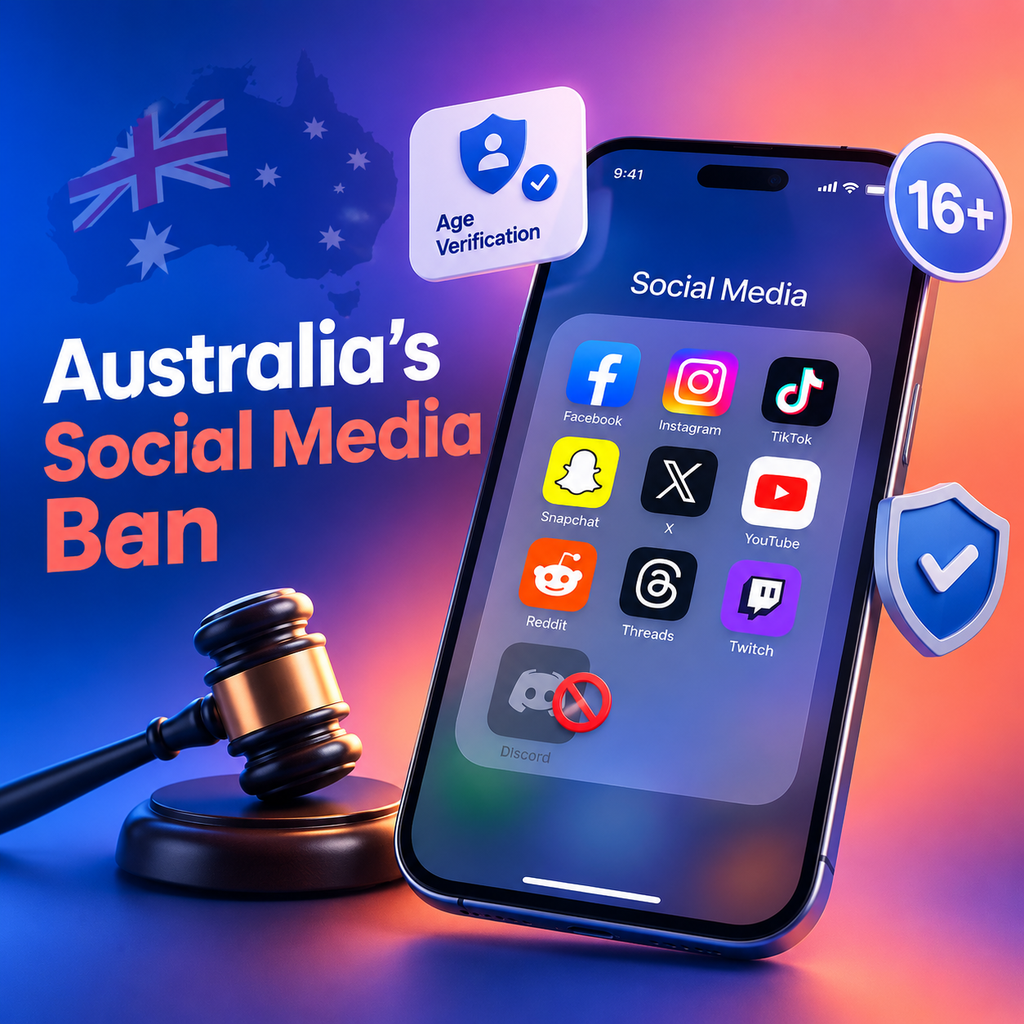
Which Apps Are Included in Australia's Social Media Ban?
Australia has made history with a world-first law that bans children under 16 from using major social media platforms. The ban, which came into effect on December 10, 2025, requires social media companies to take reasonable steps to prevent under-16s from holding accounts. Ten platforms are currently covered, but the regulator warns the list is not static and could grow as new services emerge or existing ones evolve.
The Full List of Banned Platforms
The eSafety Commission has identified ten platforms that meet the criteria for age-restricted services. These are:
- Snapchat
- TikTok
- X (formerly Twitter)
- YouTube
- Threads
- Kick (streaming platform)
- Twitch (streaming platform)
These platforms must remove existing accounts held by under-16s and prevent new registrations. Companies that fail to comply face fines of up to $49.5 million (US$32 million) for serious or repeated breaches.
How Platforms Are Assessed for the Ban
The eSafety Commission uses three main criteria to determine whether a platform falls under the ban:
- Whether the platform's sole or significant purpose is to enable online social interaction between two or more users.
- Whether it allows users to interact with some or all other users.
- Whether it allows users to post material.
If a platform meets these criteria, it is classified as an "age-restricted platform" and must comply with the new laws. Streaming platforms like Twitch and Kick were added because they enable significant social interaction, even though they are not traditional social media.
Platforms That Are Exempt from the Ban
Not all platforms are covered. Several services have been granted exemptions because they do not meet the criteria for social interaction or are considered low-risk. These include:
- Messenger (Facebook's private messaging service)
- YouTube Kids
- Discord
- GitHub
- LEGO Play
- Roblox
- Steam and Steam Chat
- Google Classroom
- RedNote
- LINE
These platforms are still allowed to host under-16s, primarily because they are used for messaging, education, gaming, or other purposes that fall outside the ban's scope.
Why YouTube Made the List Despite Initial Exemptions
The government initially planned to exempt YouTube from the ban, but later reversed that decision. YouTube's main platform was added to the list because it allows users to post and interact with content, and it has a significant social component. However, YouTube Kids remains exempt, as it is designed specifically for younger audiences and does not meet the criteria for social interaction.
This backflip highlights the complexity of regulating digital platforms and the challenges of drawing clear lines between social media and other online services.
The Role of the eSafety Commissioner
eSafety Commissioner Julie Inman Grant has emphasized that the list of banned platforms is not static. The agency is in contact with platforms that do not currently meet the criteria but could see an influx of young users attempting to circumvent the ban. Platforms like Yubo and Bluesky are being monitored, and if they become significant social interaction hubs for under-16s, they could be added to the list.
The Commissioner has also warned that platforms must use robust age assurance technologies, such as government IDs, face or voice recognition, or age inference. Self-certification or parental consent is not sufficient.
Impact on Users and Enforcement
The ban has already caused millions of children and teenagers to lose access to their accounts. Platforms have been required to remove under-16 accounts and block new registrations. While some teens have found ways to circumvent the ban, such as using a parent's photo for verification, the government says it will continue to work with platforms to strengthen enforcement.
Parents and children are not penalized for violating the ban. Instead, the responsibility falls on tech companies to take reasonable steps to keep under-16s off their platforms. The fines are intended to incentivize compliance and ensure that platforms prioritize the safety of young users.
Looking Ahead: What's Next for Australia's Social Media Ban?
Australia's ban is a bold experiment that other countries are watching closely. While critics argue it could isolate vulnerable teenagers and is difficult to implement, supporters believe it is a necessary step to protect young people from harmful content and excessive screen time.
The list of banned platforms is likely to evolve as new services emerge and existing ones change. The eSafety Commission will continue to assess platforms against the criteria and may add more to the list. For now, the ten platforms covered by the ban must comply or face hefty fines. As the digital landscape shifts, Australia's approach could set a precedent for global regulation of social media.