

 English
 Русский
 Turkish
 한국어
 العربية
 Español
 ไทย
 Tiếng Việt
 Français
 中文
 Deutsch
 Bahasa Indonesia
 Italiano
 日本語
 Polski
 Українська
 فارسی


How Facebook's Ad Targeting Went Wrong
In 2016, ProPublica revealed that Facebook allowed advertisers to exclude users from seeing ads based on their race or ethnicity. Using a feature called "Ethnic Affinities," advertisers could target or exclude groups like African Americans, Asian Americans, and Hispanics from housing, employment, and credit ads. This practice violated the Fair Housing Act of 1968 and other anti-discrimination laws. Despite Facebook's initial denials, the controversy grew as lawmakers and civil rights groups demanded action. The core issue: Facebook's powerful ad targeting tools, while revolutionary for marketers, could be weaponized to discriminate. This article explores the problem, the legal battles, Facebook's responses, and innovative solutions to prevent racially discriminatory advertising on the platform.
The Mechanics of Discriminatory Targeting
Facebook's advertising platform allows advertisers to choose audiences based on a vast array of attributes, including age, gender, location, interests, and behaviors. While Facebook does not collect users' race directly, it infers "multicultural affinity" from users' likes, pages they follow, and other activity. This category was intended to help advertisers reach diverse audiences with relevant content, but it also enabled exclusion. For example, a housing advertiser could exclude users with an affinity for African American culture, effectively denying them access to housing opportunities. Even without explicit racial categories, Facebook's algorithm can learn to target or exclude certain groups based on correlated data. A 2019 study by Northeastern University and Upturn found that Facebook's algorithm showed job ads for secretaries mostly to women and mechanic ads mostly to men, reinforcing occupational stereotypes. Such outcomes can have discriminatory effects, even if unintended.
Legal and Civil Rights Challenges
The practice of discriminatory advertising on Facebook has faced significant legal pushback. In 2016, the Congressional Black Caucus called on Facebook to stop allowing advertisers to exclude racial and ethnic groups from housing ads, citing violations of the Fair Housing Act. ProPublica's investigations showed that Facebook continued to approve ads that excluded minorities, despite promises to fix the issue. In 2018, Washington State Attorney General Bob Ferguson launched an investigation that led to a legally binding agreement requiring Facebook to remove the ability to exclude protected groups from ads for housing, employment, credit, insurance, and public accommodations. The agreement also mandated that Facebook pay $90,000 in costs. Additionally, civil rights groups filed multiple lawsuits, culminating in a landmark settlement in 2019 where Facebook agreed to change its ad practices, including removing certain targeting options for housing, employment, and credit ads. The U.S. Department of Housing and Urban Development (HUD) also filed a lawsuit arguing that Facebook's ad delivery system itself discriminates, even when advertisers do not explicitly exclude groups.
Facebook's Response: Policy Changes and Enforcement
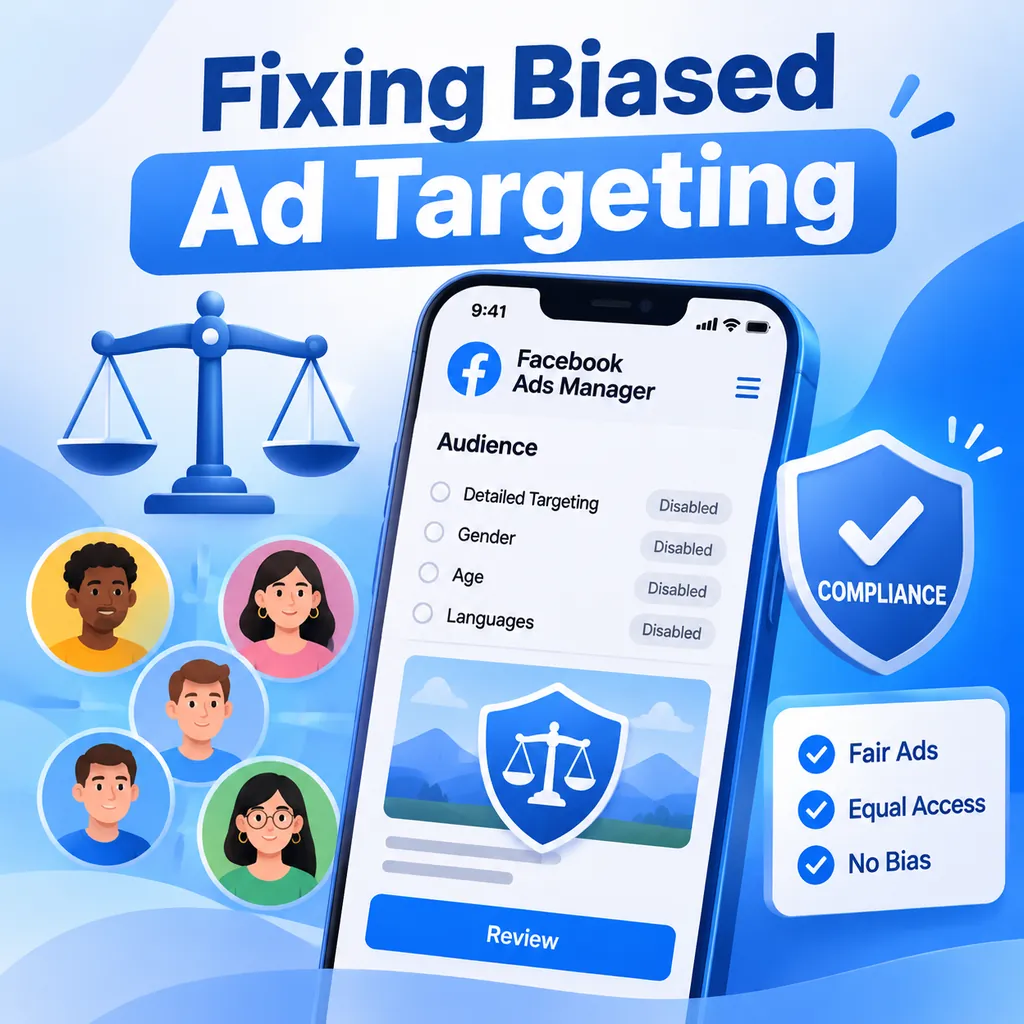
In response to the outcry, Facebook has implemented several changes to its advertising policies. In 2017, Facebook temporarily disabled the ability to exclude multicultural affinity groups from ads. The following year, it permanently removed exclusion options for protected groups in ads for housing, employment, credit, insurance, and public accommodations. Facebook also introduced a self-certification requirement for advertisers to confirm compliance with anti-discrimination laws. More recently, Facebook eliminated the multicultural affinity categories altogether, acknowledging their potential for misuse. However, enforcement has been inconsistent. ProPublica's 2020 investigation found that discriminatory ads could still slip through the cracks, such as a health care agency's job ad targeting only African Americans and excluding older workers. Facebook took down the ad after being contacted, but the incident highlighted the challenges of automated enforcement. Critics argue that Facebook's reliance on self-certification and its algorithm's own biases require more robust oversight.
The Algorithm's Hidden Bias
Even when advertisers do not specify discriminatory targeting, Facebook's ad delivery algorithm can produce discriminatory outcomes. The algorithm decides which users within a target audience see an ad, based on predictions of interest derived from user data. This can lead to ads for jobs or housing being shown disproportionately to certain demographic groups, reinforcing existing inequalities. For example, the Northeastern/Upturn study found that an ad seeking a mechanic was shown to men 13 times more often than to women, despite being targeted to all. David Brody, an attorney at the Lawyers' Committee for Civil Rights Under Law, explained that the algorithm may interpret circumstances resulting from systemic discrimination as preferences, perpetuating a cycle of inequity. Facebook has acknowledged these concerns and pledged to study algorithmic bias, but researchers and activists are frustrated by the lack of transparency and concrete findings. The company has not released any results from its internal research on racial bias in ad delivery.
Legal Protections and the Section 230 Dilemma
Facebook's legal defense often relies on Section 230(c) of the Communications Decency Act, which shields online platforms from liability for content created by third parties. In the California public accommodation lawsuit, Facebook argued that it cannot be sued over ads on its platform. However, plaintiffs argue that Facebook's ad delivery algorithms are its own product, not third-party content, and thus not protected by Section 230. This legal question remains unsettled. Meanwhile, federal laws like the Fair Housing Act and Title VII of the Civil Rights Act prohibit discrimination in housing and employment, but enforcement against platform algorithms is still evolving. California law also bans intentional discrimination in public accommodations, and a pending lawsuit argues that Facebook's algorithms treat people differently based on protected characteristics, violating that law. As litigation continues, the boundaries of platform responsibility for algorithmic discrimination will be tested.
Innovative Solutions to Prevent Discriminatory Ads
Solving the problem of racially discriminatory advertising requires a multi-faceted approach. First, transparency is crucial. Facebook should publish detailed findings from its internal research on algorithmic bias and share data with independent researchers. Second, advertisers must be held accountable through rigorous enforcement, not just self-certification. Automated systems should be audited regularly for discriminatory outcomes, and Facebook should invest in AI that can detect and prevent discriminatory ads before they run. Third, the ad delivery algorithm itself should be designed with fairness in mind, ensuring that it does not inadvertently exclude or target groups based on protected characteristics. This could involve adjusting the algorithm to prioritize diversity in ad delivery or developing fairness-aware machine learning techniques. Fourth, policymakers should update anti-discrimination laws to explicitly cover algorithmic decision-making, providing clear guidelines for platforms. Finally, collaboration between tech companies, civil rights groups, and regulators is essential to develop industry-wide standards. By combining technology, policy, and oversight, we can create an advertising ecosystem that is both effective and equitable.
The Road Ahead
The problem of racially discriminatory advertising on Facebook is not just a technical glitch; it reflects deeper societal biases that can be amplified by powerful algorithms. While Facebook has made progress by removing explicit exclusion tools, the risk remains as long as ad targeting and delivery rely on data that correlates with race. The company's recent elimination of multicultural affinity categories is a step forward, but it must be accompanied by ongoing monitoring and adaptation. Ultimately, solving this problem requires a commitment to fairness that goes beyond compliance. It means designing systems that actively counteract discrimination, not just avoid it. As advertisers, users, and regulators become more aware of these issues, the pressure on Facebook to innovate responsibly will only grow. The path to equitable advertising is complex, but with sustained effort and collaboration, it is achievable.