

 Русский
 Turkish
 Português (Brasil)
 한국어
한국어 العربية
 Español
 ไทย
ไทย Tiếng Việt
 Français
 中文
中文 Deutsch
 Bahasa Indonesia
 Italiano
 日本語
日本語 Polski
 Українська
 فارسی
فارسی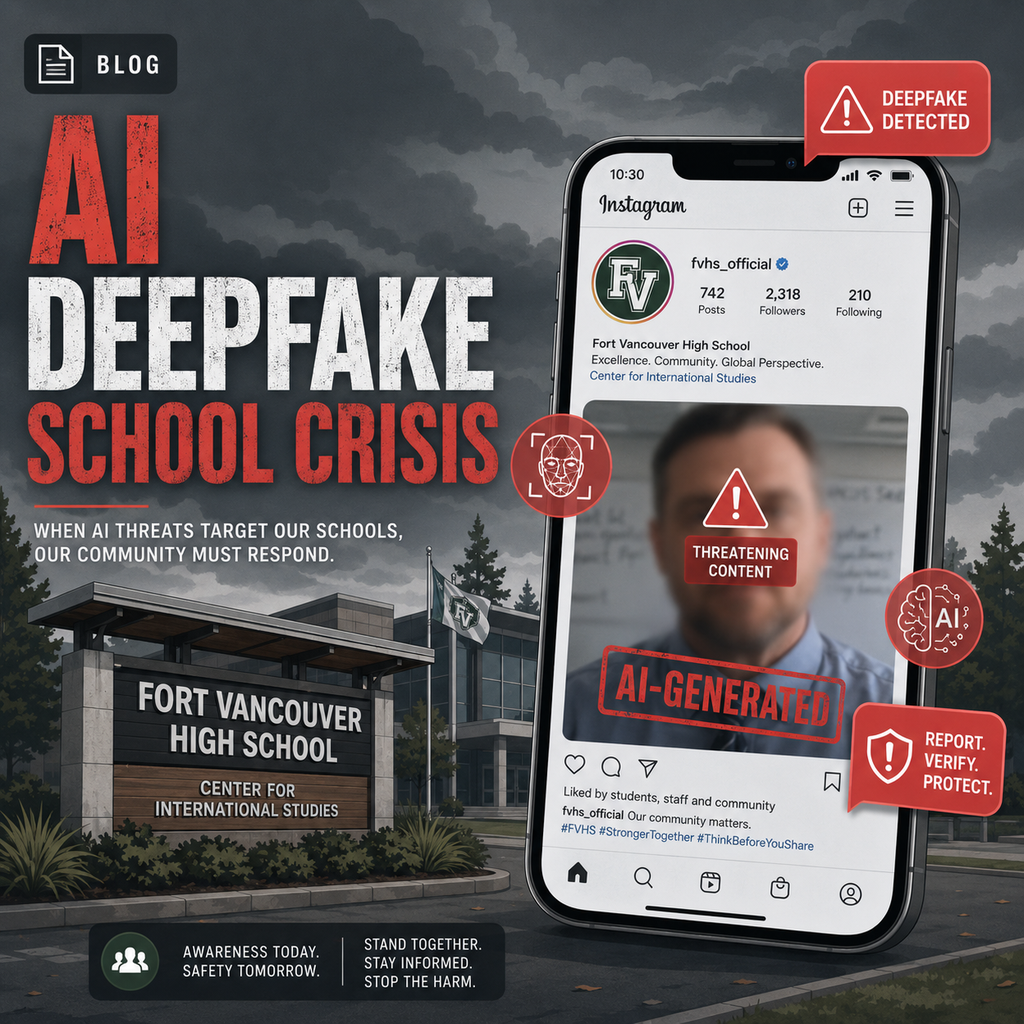
AI-generated images spark safety walkout
Nearly half the staff at Fort Vancouver High School walked out Wednesday morning, citing chronic safety concerns after an anonymous Instagram account posted AI-generated images and videos targeting teachers. The account, active for about a month, used deepfake technology to insert educators’ faces into altered clips with political and sexual references—some linking teachers to figures like conservative activist Charlie Kirk and convicted sex offender Jeffrey Epstein. The posts also included comments that teachers described as “direct threats” related to a school assembly scheduled for later that day, which was subsequently cancelled.
What exactly did the AI-generated posts show?
The Instagram account featured doctored videos and images of four Fort Vancouver teachers, according to the Vancouver Education Association president Jamie Anderson. The AI-generated content placed teachers’ faces into animated scenes that appeared to target individuals based on their religious beliefs. One video allegedly showed a teacher’s face edited into a clip featuring conservative activist Charlie Kirk and Jeffrey Epstein. Other posts included sexualized references that could be “career damaging and personally damaging,” Anderson told OPB. The account also generated fake videos of teachers fighting each other, blurring the line between reality and harmful fiction.
Law enforcement response
The Vancouver Police Department has reviewed the posts but has not identified the creator. As of Wednesday afternoon, the Instagram account appeared to have been deleted. Police spokesperson Kim Kapp said investigators are looking into “multiple accounts” but emphasized there is no known active threat to the school. Despite this, the union and teachers say the district’s response has been inadequate.
Why did teachers walk out?
The walkout was not an authorized union action, but the Vancouver Education Association supports the teachers. In a written statement, staff said the administration’s “inaction” left them feeling “unable to ensure student safety.” Teachers cited “poor communication” and “ineffective or nonexistent support for students or staff facing threats of violence.” The walkout occurred after teachers left a staff meeting Wednesday morning, motivated by what they see as a “chronic lack of response” to serious safety concerns. The district had only sent a letter to families on Tuesday, after the account had been active for a month.
District and union response
Vancouver Public Schools acknowledged the account and said they reported the posts to Instagram and law enforcement “as soon as they were brought to their attention.” Principal Luis Castro-Quintanilla issued a letter noting the large number of staff call-outs and assured families that the assembly was postponed as a precaution. However, teachers feel the district moved too slowly. The union plans to protect teachers’ due process rights if they face disciplinary action for the walkout. Anderson stated that while the walkout was individual action, the union supports the staff’s right to advocate for their safety.
The broader implications of AI threats in schools
This incident highlights a growing challenge for schools: AI-generated content can quickly escalate from harassment to credible threats. Unlike traditional cyberbullying, deepfakes are harder to trace and can cause irreparable reputational harm. The Fort Vancouver case shows that educators are now targets of sophisticated digital attacks that require rapid, coordinated responses from both schools and law enforcement. As AI tools become more accessible, districts need clear policies for handling altered media, threat assessment protocols, and training for staff and students on digital literacy.
The walkout at Fort Vancouver High School serves as a wake-up call. When half a school’s staff feels unsafe enough to leave, it’s a signal that safety frameworks must evolve alongside technology. Moving forward, schools must prioritize proactive monitoring, transparent communication, and robust support systems to protect their communities from AI-driven threats.