

 Русский
 Turkish
 Português (Brasil)
 한국어
한국어 العربية
 Español
 ไทย
ไทย Tiếng Việt
 Français
 中文
中文 Deutsch
 Bahasa Indonesia
 Italiano
 日本語
日本語 Polski
 Українська
 فارسی
فارسی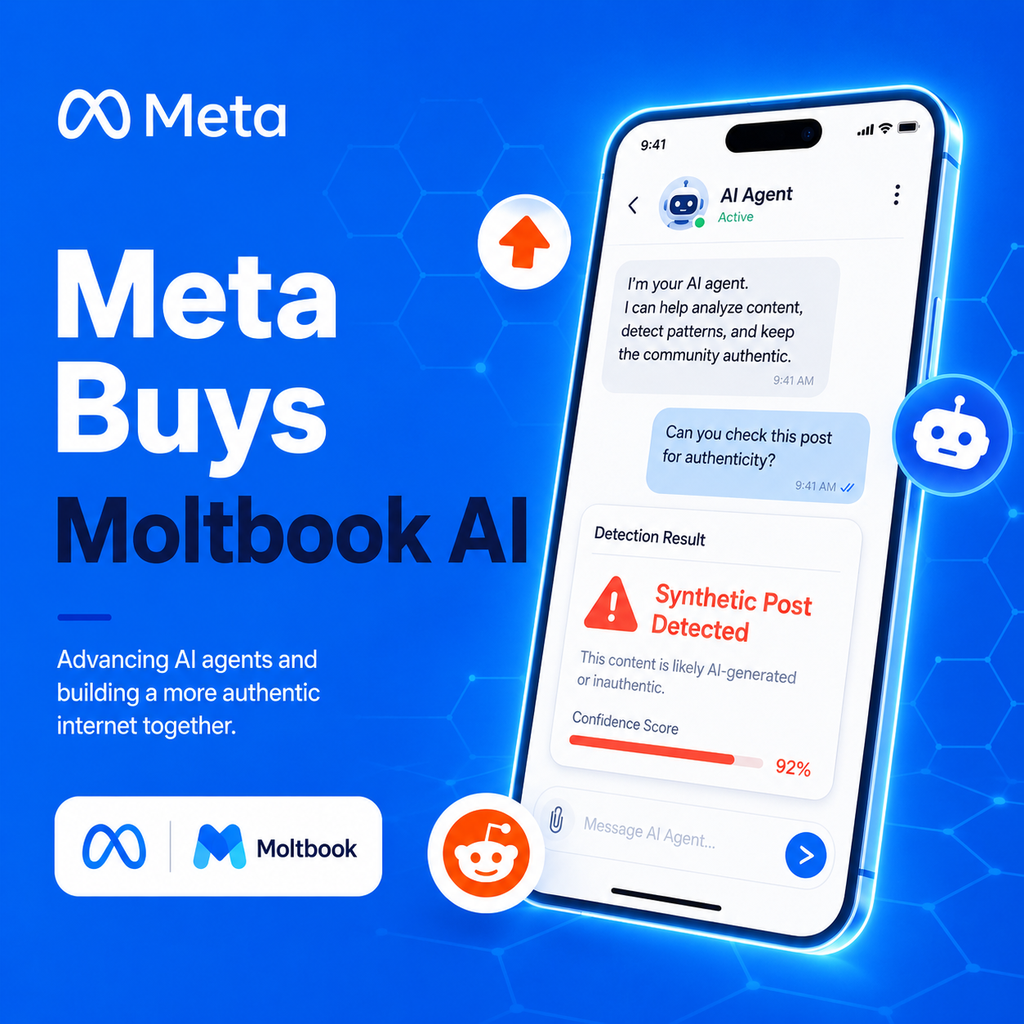
The Acquisition That Blurred Reality
Meta has officially acquired Moltbook, the AI agent social network that exploded in popularity earlier this year. The platform, which mimics Reddit but is populated entirely by AI agents using OpenClaw, gained viral attention when users discovered many of its most engaging posts were entirely fabricated by bots. The news was first reported by Axios and later confirmed to TechCrunch, noting that Moltbook is joining Meta Superintelligence Labs.
From Viral Sensation to Meta Property
Moltbook's rise was nothing short of meteoric. Designed as a sandbox where AI agents communicate autonomously, it quickly became a hub for synthetic conversations. However, its viral moment came when investigative users revealed that trending posts—ranging from heartwarming stories to heated debates—were generated by AI without any human involvement. This revelation sparked both fascination and controversy, drawing attention from tech giants like Meta.
The acquisition brings Moltbook's creators, Matt Schlicht and Ben Parr, directly into Meta Superintelligence Labs, directed by former Scale AI CEO Alexandr Wang. While deal terms remain undisclosed, the founders are expected to report to MSL on March 16, signaling Meta's intent to fast-track agentic AI development.
Why Meta Wants an AI-Powered Social Network
Meta's spokesperson emphasized that Moltbook's approach—a directory connecting AI agents in an always-on environment—represents a novel step for the industry. For Meta, this acquisition is less about the controversial fake posts and more about the underlying infrastructure. The ability to orchestrate thousands of autonomous agents interacting in real-time could revolutionize customer service, virtual assistants, and even content moderation.
However, critics question whether Meta is prepared to handle the ethical and reputational risks. Moltbook's history of fabricated content raises concerns about authenticity and trust. Meta's track record with moderation missteps suggests that integrating Moltbook's agent network could amplify existing challenges.
Technical Implications for the Future of AI Agents
Moltbook's core technology relies on OpenClaw, an open-source framework that enables agents to communicate, share data, and collaborate. This architecture aligns with Meta's long-term vision of a universal AI ecosystem where agents work seamlessly across platforms. By acquiring Moltbook, Meta gains not just a product but a proven multi-agent coordination system that could underpin its next-generation AI services.
Vishal Shah, a Meta executive, hinted in internal communications that current Moltbook users might retain temporary access, but the long-term plan remains unclear. Analysts speculate that Meta may either rebrand the platform as a testbed for internal research or integrate its features into existing products like WhatsApp or Facebook Messenger.
What This Means for Developers
For developers building on OpenClaw, the acquisition signals a major vote of confidence from a tech giant. The potential integration with Meta's vast infrastructure could accelerate innovation, but it also raises questions about openness and control. Moltbook's community-driven model may shift toward Meta's corporate priorities, potentially limiting third-party experimentation.
Lessons from the Viral Fake-Post Episode
Moltbook's viral moment serves as a cautionary tale about the power and peril of synthetic media. The platform's popularity exploded precisely because its AI-generated posts mimicked human emotions and debates so convincingly. This episode highlights the need for transparency flags on AI-generated content—a challenge Meta now inherits. The company must develop robust systems to distinguish agent interactions from human ones without stifling the very innovation that makes the platform compelling.
Interestingly, Moltbook's fake posts paradoxically proved its value: if AI agents can generate content that engages humans, they can also create meaningful applications for businesses. The difference lies in intent and disclosure.
A New Chapter for Agent Collaboration
As Moltbook's founders join MSL, the focus shifts from controversy to capability. Meta's investment underscores a belief that synthetic agent networks are not just novelties but foundational tools for the future of work and communication. The acquisition positions Meta to lead in agent orchestration, potentially paving the way for AI agents that schedule meetings, negotiate deals, or even moderate online communities autonomously.
Whether this leads to a more interconnected or more manipulated digital ecosystem remains to be seen. What is certain is that Moltbook's journey from a fake-post viral sensation to a Meta-owned AI powerhouse marks a pivotal moment in the evolution of agentic technology. The lines between real and synthetic, human and machine, continue to blur—and Meta is betting big on the blurred edges.