

 English
 Русский
 Turkish
 Português (Brasil)
 한국어
한국어 العربية
 Español
 ไทย
ไทย Tiếng Việt
 Français
 中文
中文 Deutsch
 Bahasa Indonesia
 日本語
日本語 Polski
 Українська
 فارسی
فارسی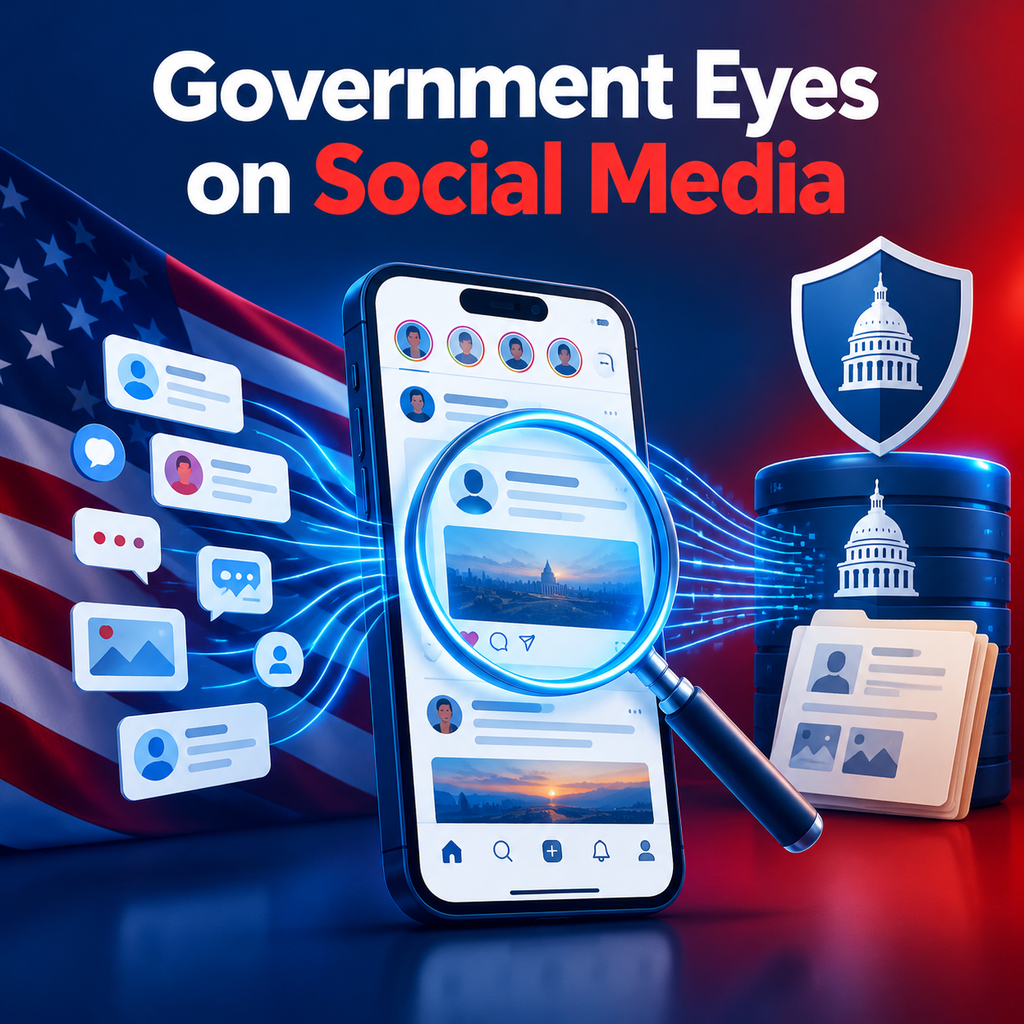
From Visa Applications to Continuous Monitoring
The U.S. government has been quietly building a massive social media surveillance apparatus that touches nearly every stage of the immigration process. What started as a limited effort to screen travelers from certain countries has evolved into a sprawling data collection enterprise spanning visa applications, device searches, and AI-powered monitoring tools. For anyone navigating the immigration system—or even just interacting with someone who is—the implications are profound. This isn't speculative future policy; it's happening now, with real consequences for privacy, free expression, and the fundamental relationship between citizens and their government.
The architecture of this system was largely constructed by the Department of Homeland Security (DHS) and the State Department. It pulls social media content into government databases through multiple channels: mandatory fields on visa applications, electronic device searches at ports of entry, automated monitoring programs, and continuous vetting initiatives that extend long after someone has been admitted to the country. What was once a narrow security measure has become a comprehensive dragnet.
The Expansion of Mandatory Social Media Identifiers
Nearly a decade ago, DHS began requesting social media identifiers from travelers coming from countries covered by the Visa Waiver Program—42 nations, primarily in Western Europe, whose citizens can visit the U.S. for up to 90 days without a visa. That was just the opening act. In 2019, the State Department dramatically expanded the collection, requiring immigrant visa applicants, including those seeking employment-based and family-based visas, to provide five years' worth of social media identifiers. The same year, nonimmigrant visa applicants—roughly 14 million people annually—faced the same requirement.
Now the administration has proposed going even further. The new plan would widen the surveillance net to include not only travelers, visa applicants, and visa holders but also their U.S. citizen contacts. That's a significant escalation. By linking individuals' online presence to government databases, officials could more easily identify, monitor, and potentially penalize people based on their online self-expression. The risk of self-censorship—driven by fear of misinterpretation or adverse consequences—becomes very real.
Ideological Vetting and the Student Visa Crackdown
The most recent flashpoint came when the State Department issued a cable directing consular officers to review the social media of all student visa applicants for "any indications of hostility towards the citizens, culture, government, institutions or founding principles of the United States," as well as for any "history of political activism." This isn't just about screening for security threats; it's about ideological vetting. The directive raises uncomfortable questions about what constitutes "hostility" and who gets to decide.
Meanwhile, U.S. Citizenship and Immigration Services announced in April that it would begin looking for "antisemitic activity" in the social media of scores of foreign nationals already in the United States. These moves represent a defining initiative of the current administration: using social media surveillance to conduct ideological vetting on a scale never before seen in American immigration policy.
The Data Retention and Analysis Machine
Once collected, social media identifiers and content don't just sit in a filing cabinet. DHS's Automated Targeting System, a powerful data analytics tool, scours identifiers collected by the State Department to flag any potential "derogatory" information relevant to visa decisions. The department also operates Continuous Immigration Vetting, which monitors individuals long after they've arrived, automatically flagging new information—including social media posts—that might raise national security or public safety concerns.
The targeting center uses social media and other sources to conduct routine analyses and determine whether individuals pose a risk or are otherwise inadmissible. Homeland Security Investigations, an arm of ICE, can scour platforms and interact with individuals using online aliases to carry out criminal investigations. Data gathered from these investigations is used to build dossiers, track locations and associations, and confirm identities through photos. Through the Overstay Lifecycle Program, ICE also monitors nonimmigrant visa holders' social media for derogatory information.
Device Searches at the Border
It's not just what you post publicly that matters. Border agents can examine phones, computers, and other devices to review posts and private messages on social media—even if they don't suspect any involvement in criminal activity or have immigration-related concerns. This authority effectively bypasses privacy settings that users rely on to keep personal communications personal. For travelers, the message is clear: your digital life may be subject to inspection without a warrant or even suspicion.
The government maintains that it only reviews publicly available information and does not collect passwords. But device searches go beyond public posts—they can expose private messages, photos, and browsing history. The distinction between public and private blurs significantly in this context, raising serious Fourth Amendment concerns that courts are still grappling with.
Mass Expansion to Immigration Benefit Applicants
USCIS has issued a proposal that, if approved, will allow it to immediately begin collecting social media identifiers from individuals submitting a range of immigration-related applications. These include applications for naturalization and green cards, adjustment of status, asylum or withholding of removal, and requests to reunite with family. The vast majority of those covered—nearly 3.4 million of the estimated 3.6 million annual applicants—are already within the United States.
This means millions of people living, working, and paying taxes in American communities could soon have their online lives scrutinized as a condition of remaining in the country. The chilling effect on free speech and association is difficult to overstate. People may think twice before posting about politics, attending protests, or even expressing personal opinions, knowing that government agencies could be watching.
Data Sharing Across Agencies
Within USCIS, data flows freely among systems like the Automated Targeting System to vet and monitor noncitizens and support immigration enforcement. The agency can scrape and analyze publicly available social media information, and this data can be shared with other agencies for a variety of purposes. The privacy notice for each USCIS form details the authority to collect information, its purpose, when it may be disclosed, and applicable routine uses.
DHS policy defines authorized uses of social media for collecting personally identifiable information, including enhancing situational awareness, investigating individuals in criminal, civil, or administrative contexts, assessing eligibility for benefits, and making personnel determinations. While the policy requires operational components to receive approval from the DHS Privacy Office, the breadth of these authorized uses suggests that social media data can be repurposed in ways applicants may not anticipate.
Privacy Safeguards and Their Limits
DHS maintains a framework of safeguards, training, and policies for using social media in vetting programs. The department states it will only view publicly available information on platforms associated with provided identifiers and will not request that platforms violate privacy settings. It also says it won't collect passwords. But civil liberties advocates argue these protections are insufficient, especially given the scale of collection and the potential for mission creep.
Recommendations from privacy experts include adopting a targeted, risk-based approach to social media screening—reserving it for cases with specific risk indicators rather than blanket collection—and establishing comprehensive protections for the collection, storage, use, and sharing of social media information to prevent breaches and misuse. As the government's trove of social media data continues to grow, the balance between national security and individual privacy hangs in the balance. The choices made now will shape the relationship between the state and the individual for generations to come.