

 English
 Русский
 Turkish
 Português (Brasil)
 한국어
 العربية
 Español
 ไทย
 Français
 中文
 Deutsch
 Bahasa Indonesia
 Italiano
 日本語
 Polski
 Українська
 فارسی
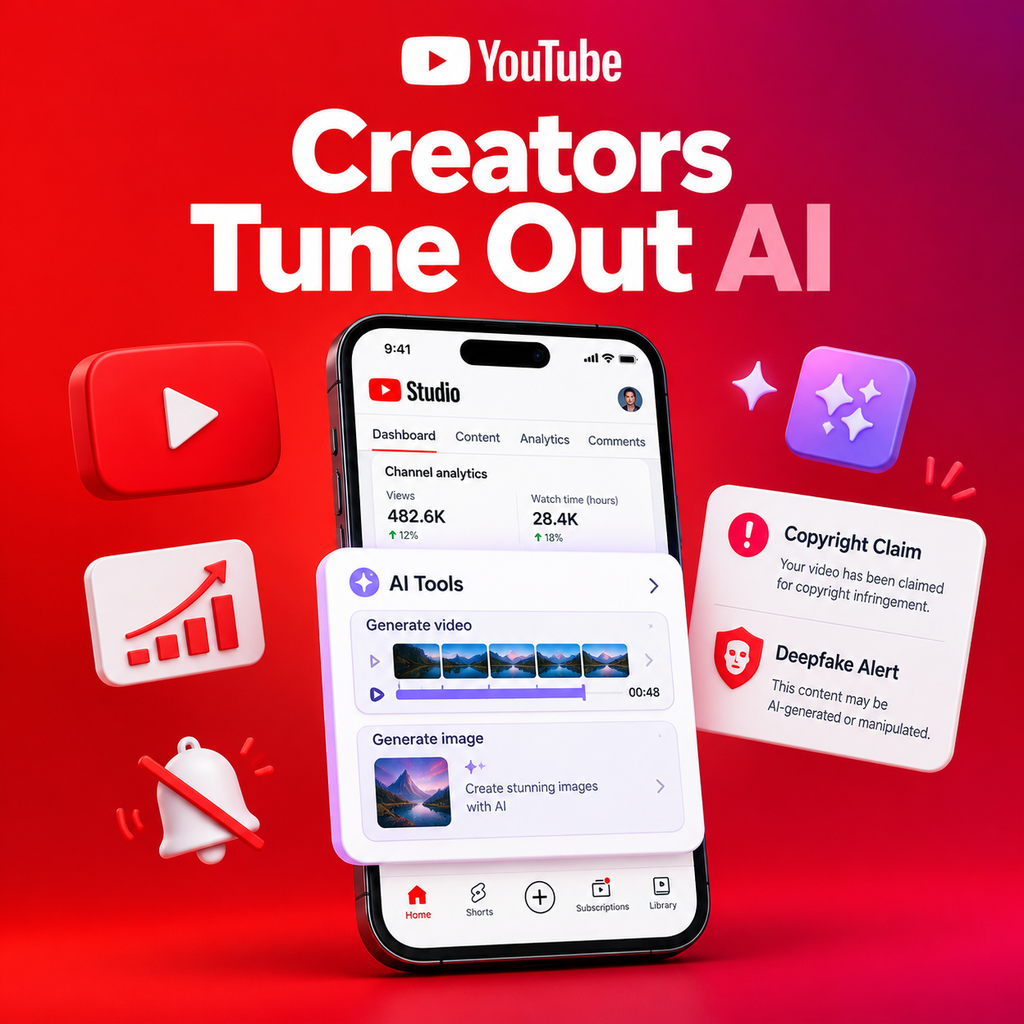
The AI Paradox: More Tools, More Problems
In September, YouTube announced a suite of in-house AI tools designed to make creators' lives easier. The response? A collective shrug. While the platform touts features like Gemini Omni for video generation and Nano Banana for image creation, many creators are too consumed by the AI arms race—fighting deepfakes, navigating copyright claims, and battling algorithmic opacity—to even notice. The irony is palpable: the very technology meant to empower them has become a source of anxiety and exhaustion.
Inside YouTube's New AI Toolkit
On paper, the new tools sound impressive. Gemini Omni lets creators generate vertical video clips up to 10 seconds long, while Nano Banana turns text prompts into images. There's also Edit with AI, which transforms raw footage into a polished first draft with music and effects. These features are rolling out in select countries, with promises of more to come. But for many creators, these tools feel like a distraction from the real battles: managing content ID claims, protecting their likeness from deepfakes, and deciphering ever-changing monetization policies.
The rollout itself has been cautious—limited to mobile devices in a handful of countries like the US, Canada, and India. And while YouTube emphasizes safeguards to prevent misuse, creators wonder if these tools will actually solve their problems or simply add another layer of complexity to an already crowded workflow.
The Real AI Battlefield: Deepfakes and Copyright
While YouTube touts its creative AI, creators are grappling with the darker side of the technology. Deepfakes are rampant, and even with tools like likeness detection—which works similarly to Content ID but for faces and voices—the process of requesting removal is cumbersome. Creators must constantly monitor for unauthorized use of their likeness, often discovering deepfakes only after they've gone viral.
Then there's the copyright conundrum. AI-generated content often pulls from existing works, leading to claims that can demonetize videos overnight. YouTube requires creators to disclose AI use, but the labeling system is inconsistent—sometimes automatic, sometimes not—and the fear of accidentally triggering a claim makes many creators wary of using AI at all. The result is a paradox: the tools meant to enhance creativity are being avoided because they introduce new risks.
Disclosure Dilemmas
YouTube mandates that creators disclose realistic AI-generated content, with labels appearing on videos. But the rules are fuzzy: what counts as "realistic"? And if YouTube's systems detect AI use, they may apply a label automatically—even if the creator didn't disclose. This lack of clarity forces creators to err on the side of caution, often at the expense of creativity.
Why Creators Are Tuning Out
For most creators, the day-to-day grind leaves little room to experiment with new AI features. Between planning, filming, editing, and engaging with their community, the last thing they need is another tool to learn. Moreover, many are skeptical that YouTube's AI tools are designed to help them—or to help YouTube reduce costs and increase control.
There's also a sense of fatigue. AI announcements have become a dime a dozen, and creators have grown numb to the hype. Without clear, tangible benefits—like higher revenue or more time—the new tools feel like noise. As one creator put it, "I'm too busy fighting AI-generated spam and deepfakes to care about another AI editing app."
Bridging the Gap: What YouTube Could Do
To win creators over, YouTube needs to address their immediate pain points. For starters, it could streamline the deepfake removal process, making it faster and more transparent. It could also provide clearer guidelines on AI disclosure and copyright, reducing the guesswork that currently paralyzes creators.
Additionally, YouTube could offer tangible incentives—such as revenue boosts or priority support—for creators who adopt its AI tools. And rather than rolling out features piecemeal, it could focus on integrating AI seamlessly into existing workflows, so creators don't have to add another app to their stack. The goal should be to make AI feel like a helpful assistant, not another hurdle.
Learning from Creator Feedback
Some creators have praised tools like Ask Studio, which provides tailored insights based on channel data. This suggests that AI is most welcome when it solves specific, data-driven problems. YouTube could double down on such features, using AI to offer personalized recommendations that save time and reduce guesswork.
The Road Ahead: AI as Enabler, Not Obstacle
The potential for AI to transform content creation is immense. Imagine a world where AI handles tedious tasks—like editing and dubbing—freeing creators to focus on storytelling. But that future requires trust. Creators need to feel that AI is on their side, not a threat to their livelihood.
YouTube has taken steps in the right direction with likeness management and auto-dubbing. But to truly win creators' hearts, it must prioritize their struggles over its own AI ambitions. The platform should listen more, promote less, and deliver tools that genuinely make creators' lives easier. Until then, the AI tools will remain a footnote in the ongoing battle between creators and the machines.