

 English
 Русский
 Turkish
 Português (Brasil)
 한국어
 العربية
 Español
 ไทย
 Tiếng Việt
 Français
 中文
 Deutsch
 Bahasa Indonesia
 日本語
 Polski
 Українська
 فارسی
When a Pricing Email Ignites a Movement
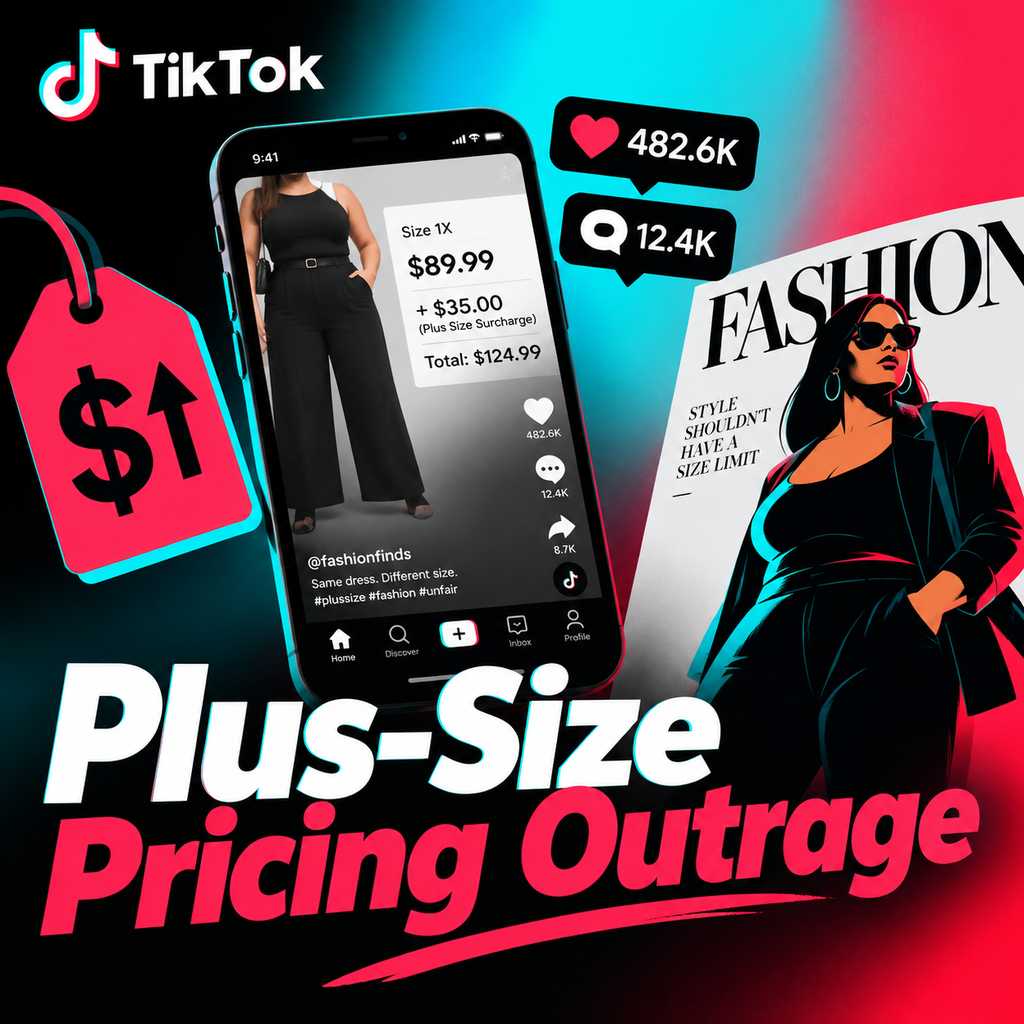
It started with a simple inquiry: Megan Mesveskas, founder of the body-diverse agency Model Nexus, reached out to a well-known New York photographer to book test shoots for her clients. The response she received, however, wasn’t so simple. The email quoted $950 to photograph a “standard” model and $1,050 for a “plus/curve” model—a $100 surcharge that Mesveskas found so brazen she shared it on TikTok. Within days, the screenshot went viral, sparking outrage and a heated debate about body image, economics, and the fashion industry’s deep-seated biases.
The photographer, William Lords, who has shot for Vogue Arabia and worked with celebrities like Katie Holmes, quickly became the center of a social media firestorm. But as the story unfolded, a more complex picture emerged—one that raises uncomfortable questions about diversity, inclusion, and the hidden costs of change.
The Man Behind the Lens: William Lords’ Defense
Lords didn’t stay silent for long. In interviews with the New York Post and other outlets, he explained that his pricing was not a matter of discrimination but of practical necessity. As both photographer and stylist for these test shoots, Lords sources high-end designer clothing for models to wear—a costly endeavor he funds out of his own pocket.
“When I started shooting curve models, I found it was so difficult to get clothes because not one curve model is shaped the same,” he told The Independent. “To get so much hate for $100 when I spent thousands of dollars on these girls to make sure they’re part of the high-end industry is so wrong.”
Lords claims that designer samples in sizes 0 to 4 are plentiful and easy to borrow or buy, but larger sizes are scarce, often more expensive, and rarely available in the variety needed for a professional portfolio shoot. The $100 surcharge, he says, barely covers the extra effort and expense.
The TikTok Backlash: Models Speak Out
Mesveskas’s initial video, which garnered over 100,000 views, struck a nerve. Fellow curve model Sixtine Rouyre, who has more than 600,000 followers across Instagram and TikTok, reposted it with a scathing commentary: “This is just one more example of how awful the modeling industry is to literally anyone over a size zero.”
The response was immediate and overwhelming. Thousands of commenters expressed frustration, with many calling the pricing policy “fatphobic” and “discriminatory.” For Mesveskas, the surcharge felt like a penalty for simply existing in a larger body. “I have never in my life seen a photographer blatantly charge more for models he deemed curve or plus,” she said.
But Lords was taken aback by the vitriol. “It’s easy to jump on something you don’t understand,” he told the Post. “I’m a black man in America, and two white women tell me I’m discriminating [against] them? I’m so hurt by this. Nobody is telling the true story.”
The Hidden Costs of Dressing Plus-Size Models
Lords’ explanation sheds light on a lesser-known fashion industry reality: plus-size designer clothing is harder to find, more expensive, and less varied. Major designers often produce limited runs in larger sizes, and sample sizes—the ones used for photo shoots—are notoriously small. This scarcity forces stylists to either special-order pieces or settle for less prestigious brands, which can undermine the quality of a model’s portfolio.
“I go out there with my own card—my debit card—to purchase clothes,” Lords said. “They cost almost thousands of dollars.” The $100 fee, he insists, is a modest attempt to recoup some of that cost without passing the full burden to the models. Yet critics argue that this logic still penalizes the model for an industry-wide failing. As Mesveskas pointed out, “If Lords wants to be a stylist as well as a photographer, that’s fine, but do the math on how you can charge a fair rate for everyone.”
The Broader Debate: Body Diversity in Fashion
This incident is not isolated. It taps into a long-running conversation about the fashion industry’s treatment of anyone above a size zero. While plus-size models are gaining visibility on runways and in campaigns, they still face systemic barriers—from limited clothing options to unequal pay and stereotyping.
The term “plus-size” itself is contentious. In modeling, it often refers to anyone above a size eight, while plus-size clothing typically starts at a size 16. This disconnect highlights how the industry categorizes and commodifies bodies. For Mesveskas and Rouyre, the fight isn’t just about $100—it’s about challenging a status quo that consistently devalues non-standard bodies. “I don’t think focusing on Lords alone is helpful,” Mesveskas said. “But if we can continue to shine a light on the way models deemed ‘not standard’ are treated, we can continue to chip away at the status quo.”
The Aftermath: Legal Threats and Industry Repercussions
Lords, feeling unfairly targeted, considered legal action against Mesveskas and Rouyre, calling their videos a “smear campaign.” He later decided to charge the same price for all models, but the damage was done. His Instagram comments were disabled after a flood of criticism, and the incident sparked widespread media coverage.
For Lords, the ordeal has been deeply personal. “This is not a case of me being bad to the models,” he told the Post. “This is a case of me charging a hundred dollars because I put more effort into something. That’s all I’m charging for. I’m not the bad guy they’re making me out to be.” Yet for many, the explanation—however logical—doesn’t erase the sting of being priced differently because of body size.
Moving Forward: Toward Fair and Inclusive Pricing
The controversy has forced a reckoning within the industry. Some photographers and agencies are now re-evaluating their pricing structures, recognizing that surcharges based on body size can perpetuate harmful norms. At the same time, the conversation has highlighted the need for greater availability of plus-size designer clothing—a gap that, if addressed, could eliminate the economic justification for such fees.
Ultimately, the uproar over $100 is a symptom of a larger problem: a fashion ecosystem that still treats non-standard bodies as an exception rather than the norm. As Mesveskas and Rouyre have shown, social media can be a powerful tool for accountability, but it also requires nuance. Lords’ story reminds us that behind every pricing policy are real people—and that true inclusion demands more than just adjusted rates; it requires a fundamental shift in how the industry values and accommodates all bodies.