

 Русский
 Turkish
 Português (Brasil)
 한국어
한국어 العربية
 Español
 ไทย
ไทย Tiếng Việt
 Français
 中文
中文 Deutsch
 Bahasa Indonesia
 Italiano
 日本語
日本語 Polski
 Українська
 فارسی
فارسی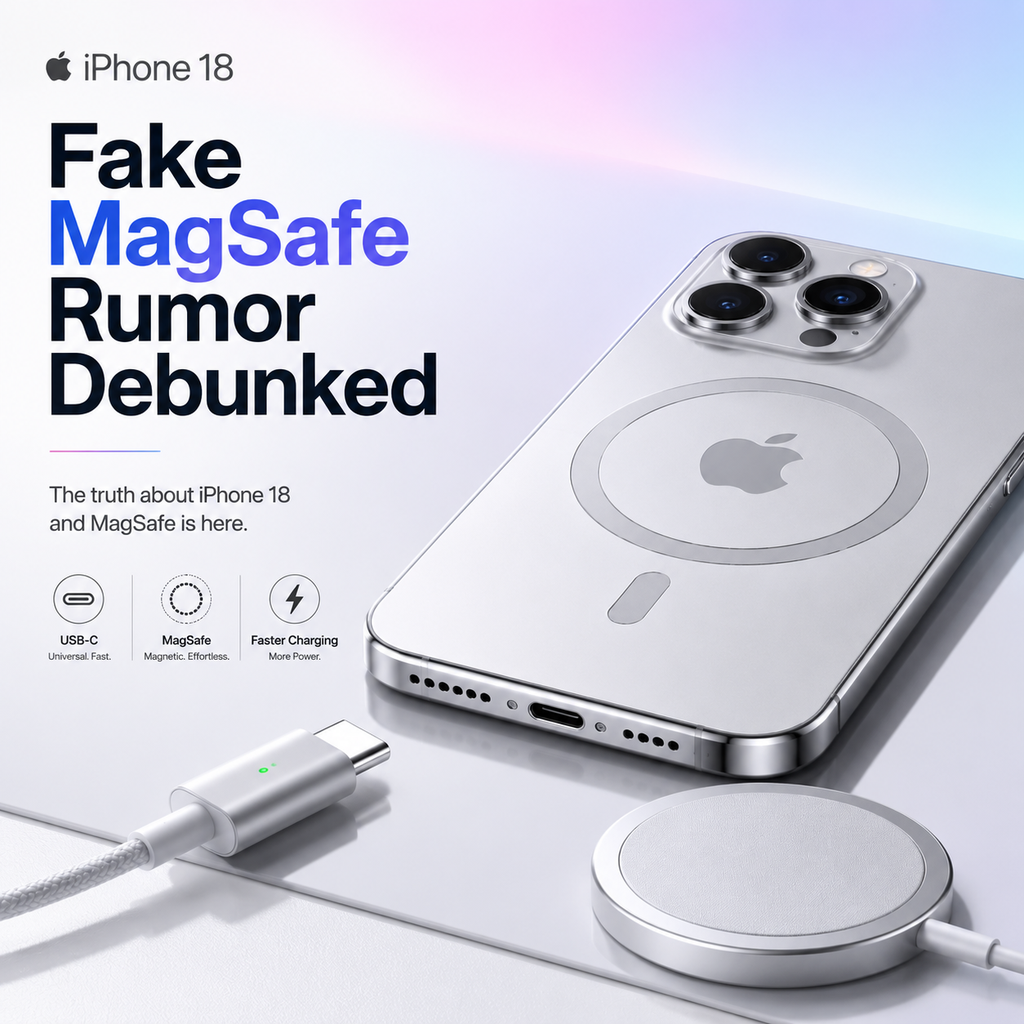
The Viral Video That Started It All
Another day, another viral rumor with zero basis in reality. This time, it's a TikTok video that's been viewed over 17 million times, claiming that the iPhone 18 will ditch USB-C in favor of a MacBook-style MagSafe connector. The video shows an animation of a sleek, braided cable snapping onto the bottom of a phone, with a green LED lighting up the connector. It looks cool, sure, but it's pure fiction. Let's break down why this rumor is not just wrong, but fundamentally misunderstands how Apple's charging ecosystem works.
The Two Different MagSafes
Apple's use of the MagSafe name for two distinct technologies has caused endless confusion. On the Mac, MagSafe is a magnetic power connector that snaps onto the side of the laptop. It's designed to detach easily if you trip over the cable, preventing your expensive MacBook from crashing to the floor. On the iPhone, MagSafe is a circular array of magnets embedded in the back of the device, used for wireless charging and accessory attachment. The iPhone's MagSafe uses inductive charging, not a physical connection, and maxes out at 25W. The Mac's MagSafe, in its latest iteration, delivers up to 140W through a physical plug. They are completely different beasts.
Why the iPhone's MagSafe Is Better for Phones
Wireless charging is a convenience that iPhone users have come to love. You just place your phone on a puck and it starts charging. No cables to fumble with, no ports to wear out. The magnetic alignment ensures the coil is perfectly positioned for efficient power transfer. A physical MagSafe connector on the bottom of the iPhone would be redundant, since you already have USB-C for wired charging, and it would compromise water resistance and structural integrity.
The EU and USB-C Are Here to Stay
Even if Apple wanted to switch to a proprietary connector, the European Union has mandated that all smartphones sold in its member states must use USB-C for wired charging. The iPhone 15 and later already comply. Apple can't simply drop USB-C without facing massive regulatory hurdles. Moreover, USB-C has become a universal standard for everything from laptops to earbuds. It makes no sense for Apple to abandon it, especially when they've just fully embraced it with the iPhone 15 and 16 series, as well as the iPhone 17 lineup. The ecosystem is built around USB-C now, and reverting to a niche connector would be a regression for consumers.
The Practicality of One Cable
One of the best things about USB-C is that you can use the same cable to charge your iPhone, iPad, Mac, and most other gadgets. Introducing a new MagSafe port would mean carrying a separate cable just for your iPhone. It's inconvenient and wasteful. The viral video's charming braided cable might look nice, but it would become just another proprietary cable to lose or forget.
What the Future Actually Holds for iPhone Charging
Instead of focusing on a fictional MacBook-style port, let's look at the real trends. Apple is steadily improving wireless charging speeds. The current MagSafe charger can deliver up to 25W on the latest iPhone 17 models and iPhone Air, and it's certified for Qi2, the industry-wide standard for magnetic wireless charging. That's great for interoperability. Future iPhones will likely continue to refine wireless charging, possibly with higher wattage and better thermal management, but the physical port is not going anywhere soon. The iPhone 18 will almost certainly have USB-C, just like every flagship phone on the market.
The Wishful Thinking We Can't Shake
Despite the reality, I can't help but wish for something like the Mac's MagSafe on the iPhone. Imagine a sturdy, magnetic connector that not only charges but also provides a high-speed data connection, without the fuss of aligning a wireless puck. It would be a throwback to the days of MagSafe on the MacBook, but with modern-day benefits. However, the engineering challenges are immense, and the regulatory landscape doesn't allow it. So, while we might never see a physical MagSafe connector on an iPhone, we can still appreciate the wireless MagSafe we have, which is arguably more innovative. It's a silent, effortless way to power up, and it's only getting better with each generation.
Bottom Line: Don't Believe Everything You See Online
The next time you see a viral video claiming a radical design change for an unreleased iPhone, take it with a grain of salt. Rumors can be fun, but they often lack technical and regulatory context. USB-C is here to stay, wireless charging is the future, and the iPhone 18 will be no different in that regard. So, rest easy, keep your USB-C cables handy, and enjoy the magnetic convenience of MagSafe on the back of your phone. The future of charging is wireless, not a tiny laptop plug.