

 Русский
 Turkish
 Português (Brasil)
 한국어
한국어 العربية
 Español
 ไทย
ไทย Tiếng Việt
 Français
 中文
中文 Deutsch
 Bahasa Indonesia
 Italiano
 日本語
日本語 Polski
 Українська
 فارسی
فارسی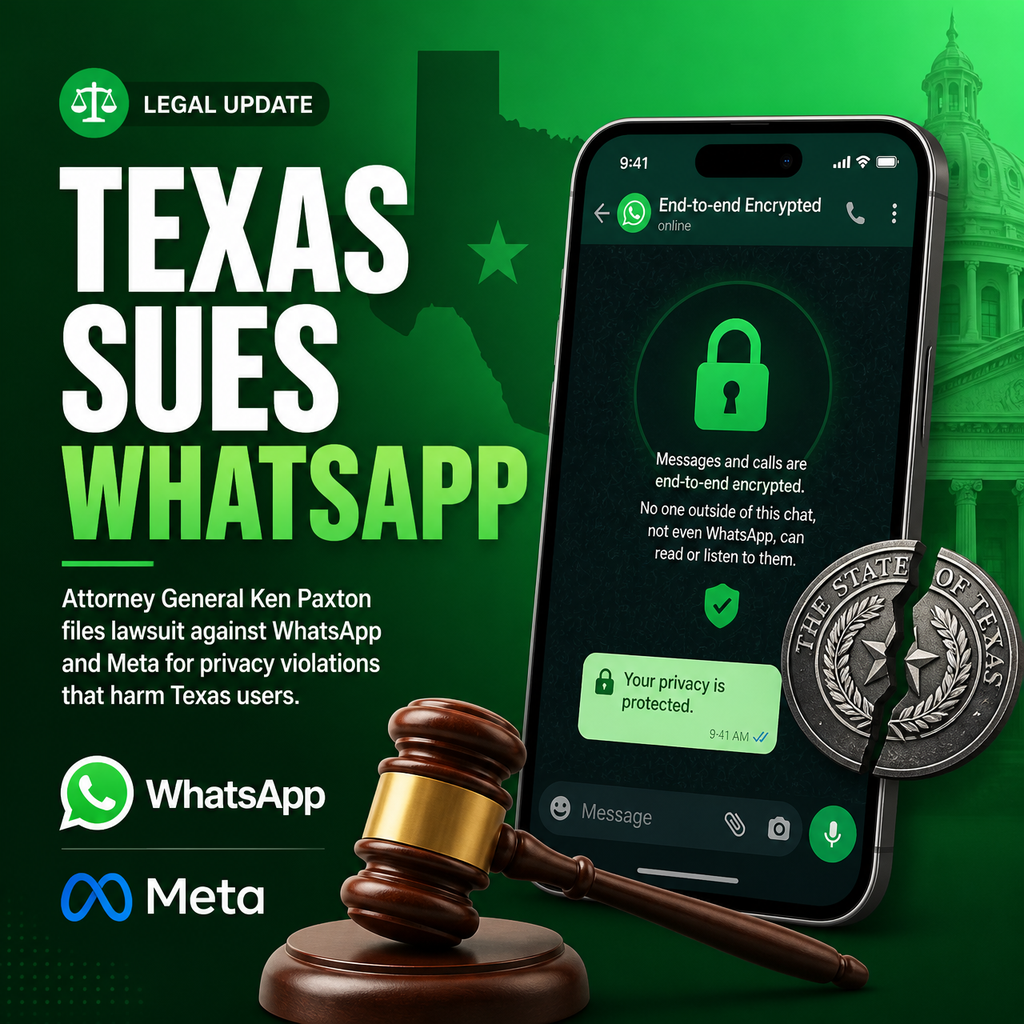
Texas Takes Legal Action Against Meta and WhatsApp
Texas Attorney General Ken Paxton has filed a lawsuit against Meta Platforms and its subsidiary WhatsApp, alleging that the companies misled consumers about the privacy of their encrypted messages. The lawsuit, filed in Harrison County district court, claims that WhatsApp's promise of end-to-end encryption is false and that Meta employees can access users' private communications.
According to the complaint, Meta allegedly stores WhatsApp messages in unencrypted form and operates an internal system that allows employees and contractors to view message content. This directly contradicts WhatsApp's marketing claims that messages are protected from everyone, including the company itself.
The Core Allegations: What's Behind the Lawsuit
At the heart of the lawsuit is the claim that WhatsApp's encryption is not as secure as advertised. The state alleges that Meta has a tiered permissions system that grants different levels of access to employees, including content moderators, who can request and view private messages. The complaint cites a Commerce Department investigation and a whistleblower report to the SEC, suggesting that Meta can access messages on a large scale.
Paxton stated, "WhatsApp markets its services as secure and encrypted, but it does not deliver on those promises. I am suing to protect Texans' privacy and ensure that WhatsApp by Meta does not mislead Texans by unlawfully accessing private conversations and data." The lawsuit seeks a permanent injunction to stop Meta from accessing messages without consent, along with fines of $10,000 per violation under the Texas Deceptive Trade Practices Act.
Meta's Response: Denial and Defense of Encryption
Meta has firmly denied the allegations, calling them "categorically false and absurd." The company emphasizes that WhatsApp has used end-to-end encryption based on the Signal protocol for over a decade, ensuring that only senders and recipients can read messages. Meta spokesperson Rachel Holland said, "WhatsApp cannot access people's encrypted communications, and any suggestion to the contrary is false. We will fight this suit as we continue defending our strong record on protecting people's messages."
However, the lawsuit references whistleblower accounts that describe an internal system for accessing messages, which contradicts Meta's stance. Legal experts suggest that this case could set a precedent for how encryption claims are evaluated under consumer protection laws, potentially impacting the broader tech industry.
Broader Implications for Privacy and Technology
This lawsuit is part of a larger trend of increased scrutiny on tech companies' privacy practices. Texas has been proactive in suing major corporations over data privacy issues, as seen with its previous case against Google. The outcome of this case could influence how companies market encryption and handle user data, especially as consumers become more aware of privacy concerns.
The case also raises questions about the balance between security and business needs. While end-to-end encryption is designed to protect user data, companies may have legitimate reasons to access content for moderation or legal compliance. However, the lawsuit argues that any such access must be transparent and consensual, not hidden behind misleading marketing.
What This Means for Users and the Future of Messaging Apps
For users, this lawsuit highlights the importance of understanding the terms of service and the actual privacy guarantees of messaging platforms. It also underscores the need for stronger regulatory oversight to ensure that companies uphold their privacy promises. As the case proceeds, it will be interesting to see how courts interpret the legal obligations of companies offering encrypted services and whether this leads to more stringent enforcement of privacy claims.
Innovatively, this lawsuit could compel tech companies to be more explicit about any limitations of their encryption and to provide users with clearer options for privacy control. It may also encourage the development of new technologies that truly leverage encryption without backdoors, ensuring user trust. Whether Meta will adapt its practices or face legal consequences remains to be seen, but one thing is clear: the battle over privacy and encryption is far from over.