

 Русский
 Turkish
 Português (Brasil)
 한국어
한국어 العربية
 Español
 ไทย
ไทย Tiếng Việt
 Français
 中文
中文 Deutsch
 Bahasa Indonesia
 Italiano
 日本語
日本語 Polski
 Українська
 فارسی
فارسی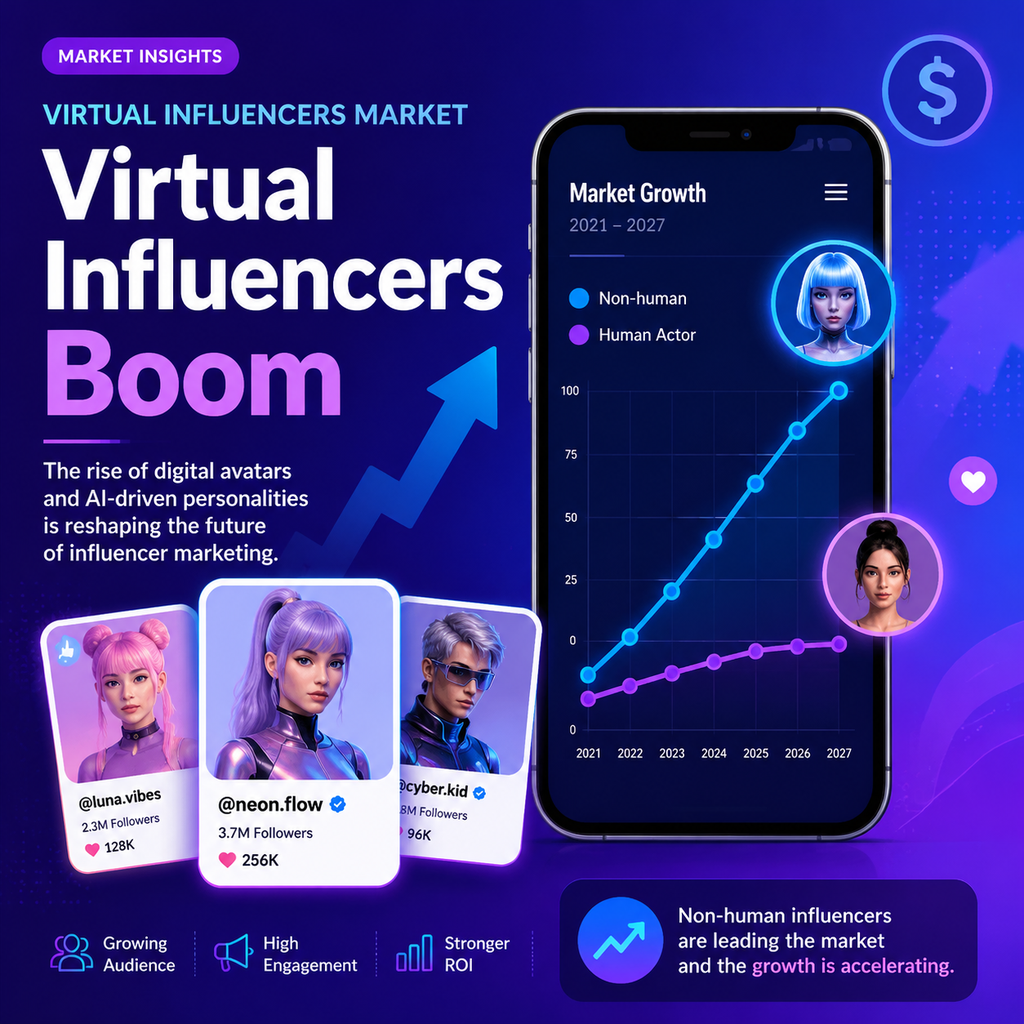
Virtual Influencers Market Overview
The virtual influencers market is experiencing explosive growth, with projections indicating a market size of USD 170.2 billion by 2034, driven by a remarkable CAGR of 39.5%. In 2024, the market was valued at approximately USD 6.06 billion, and it is expected to more than double by 2030, reaching USD 45.88 billion. This rapid expansion is fueled by brands increasingly adopting digital personas for innovative marketing strategies that resonate with tech-savvy audiences.
Virtual influencers—computer-generated characters with human-like appearances and personalities—offer unique advantages over human influencers, including full control over messaging, 24/7 availability, and the ability to appeal to global audiences without cultural or language barriers. As these digital avatars become more sophisticated, they are being embraced across industries such as fashion, beauty, entertainment, and food & beverage.
Key Market Drivers and Trends
Several factors are propelling the virtual influencers market forward. First, the growing prevalence of social media and digital platforms has created a fertile ground for virtual personalities to engage with millions of followers. Second, brands are seeking cost-effective alternatives to traditional celebrity endorsements, and virtual influencers offer scalable solutions without the risks of human controversy. Third, advancements in artificial intelligence (AI) and 3D modeling have made virtual influencers more realistic and interactive, enhancing their appeal.
Another significant trend is the rise of hyper-personalized marketing, where virtual influencers can be tailored to specific brand identities and audience segments. Additionally, the COVID-19 pandemic accelerated the shift toward digital interactions, further boosting the adoption of virtual influencers. Notably, Asia Pacific is emerging as the fastest-growing region, driven by high social media penetration and early adoption of virtual idols in countries like Japan, South Korea, and China.
Market Segmentation by Type and Application
By Type: Humanoid vs. Non-Humanoid
The market is segmented into humanoid and non-humanoid virtual influencers. Humanoid influencers—those that resemble humans—dominate the market due to their relatability and versatility. Non-humanoid influencers, including animated characters and animals, are gaining traction in niche areas such as gaming and kid-oriented content. As technology evolves, the line between these categories is blurring, with hybrid models emerging.
By Application: Industry Vertical Analysis
Virtual influencers are used across multiple industries. Fashion and beauty account for the largest share, as digital models can showcase products without the constraints of physical photoshoots. Entertainment and media are also major adopters, leveraging virtual influencers for movies, music, and streaming content. The food & beverage sector, retail, and healthcare are increasingly experimenting with digital personas to connect with younger demographics. The flexibility of virtual influencers allows them to be deployed in customer service, virtual events, and brand storytelling.
Regional Analysis and Growth Opportunities
North America held the largest market share in 2024, driven by the presence of major technology companies and a mature influencer marketing ecosystem. However, Asia Pacific is set to surpass other regions due to rapid digitalization and cultural acceptance of virtual beings. Europe is also witnessing steady growth, with luxury brands leading the adoption. The Middle East and Africa, along with Latin America, present untapped opportunities as internet penetration improves.
Key growth opportunities include integrating virtual influencers with e-commerce platforms for shoppable content, using AI to enable real-time interactions, and developing virtual influencers for educational and corporate training purposes. Collaborations between brands and virtual influencer creators are becoming more common, creating new revenue streams for both parties.
Competitive Landscape and Future Outlook
The competitive landscape is fragmented, with numerous startups and established firms racing to capture market share. Companies are focusing on innovation, such as developing virtual influencers with emotional intelligence and lifelike movements. Partnerships between technology providers and marketing agencies are also intensifying.
Looking ahead, the virtual influencers market is poised for transformative growth. As AI and generative technologies advance, virtual influencers will become even more autonomous and capable of creating their own content. The market's CAGR of 39.5% reflects not just a trend but a fundamental shift in how brands engage with consumers. By 2034, virtual influencers will be an integral part of the marketing mix, offering endless possibilities for creative storytelling and authentic connection in a digital-first world.