

 Русский
 Turkish
 Português (Brasil)
 한국어
한국어 العربية
 Español
 ไทย
ไทย Tiếng Việt
 Français
 中文
中文 Deutsch
 Bahasa Indonesia
 Italiano
 日本語
日本語 Polski
 Українська
 فارسی
فارسی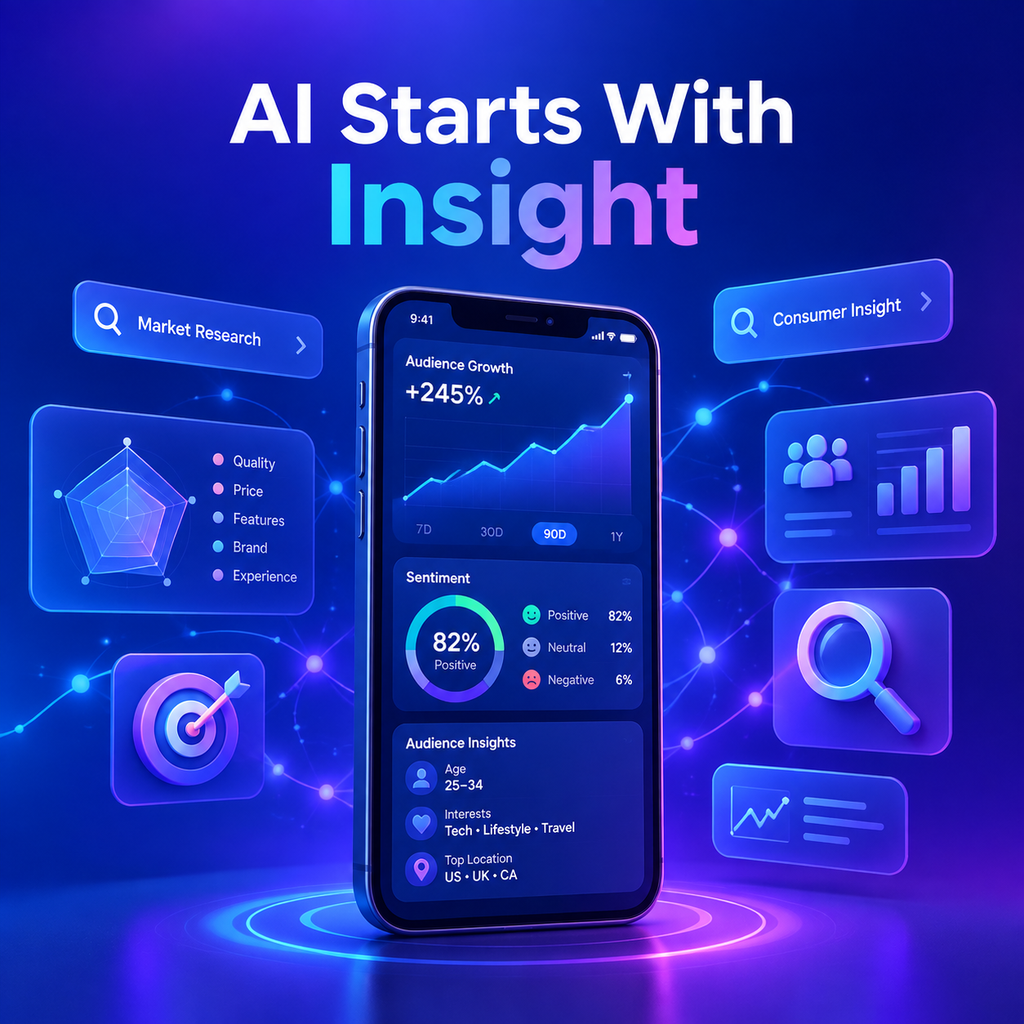
The Intelligence Advantage: How AI is Reshaping Marketing Strategy
For years, artificial intelligence in marketing has been synonymous with content generation—drafting blog posts, crafting social media captions, and automating email sequences. But the real game-changer lies not in what AI can create, but in what it can uncover. According to recent industry data, 41% of marketers now use AI tools to analyze data for insights, while 40% leverage AI to conduct research. These numbers signal a pivotal shift: the most valuable AI use cases in marketing are those that start with intelligence, not creation.
From Content Factory to Insight Engine
The prevailing narrative around AI in marketing has been dominated by its ability to produce content at scale. And there's no denying that AI has revolutionized content creation—51% of marketing teams use AI to optimize content, and 50% create content with AI. But focusing solely on creation is like using a supercomputer to type a memo: you're tapping into a fraction of its potential.
AI's true power lies in its capacity to process vast datasets, identify patterns, and deliver actionable insights that humans might miss. As one industry guide notes, AI in market research is about "speeding up existing workflows and creating entirely new ways of working." By shifting the focus from output to input—from creating assets to informing decisions—marketers can unlock a level of strategic intelligence that was previously out of reach.
Uncovering Consumer Sentiment at Scale
One of the most compelling intelligence-driven use cases for AI is sentiment analysis. Traditional methods like surveys and focus groups offer snapshots, but AI can analyze millions of data points across social media, forums, and review sites in real time. This allows brands to gauge public opinion, track emotional responses to campaigns, and adjust messaging on the fly.
For example, social listening tools powered by AI can detect emerging trends and shifts in consumer sentiment before they hit the mainstream. This early warning system gives marketers a competitive edge, enabling them to pivot strategies quickly and authentically. As highlighted in a recent report, AI-driven sentiment analysis helps businesses "understand public opinion by evaluating consumer sentiment across social media, forums, and other digital spaces."
Predictive Analytics: Looking Around the Corner
Beyond sentiment, AI excels at predictive analytics—forecasting consumer behavior and market movements. By analyzing historical and live data, AI models can identify patterns that precede market shifts, giving marketers foresight to capitalize on emerging opportunities. This isn't just about staying ahead—it's about anticipating the next wave.
Competitive Intelligence: Know Thy Rival
Understanding the competitive landscape is another area where AI-driven intelligence outshines traditional methods. AI tools can monitor competitors' strategies, pricing changes, and product launches in real time, providing a continuous feed of actionable intelligence. This allows marketing teams to benchmark performance, identify gaps, and refine positioning.
As noted in a 2024 guide, competitive intelligence tools like Crayon can track website updates, analyze pricing trends, and monitor shifts in customer behavior. With such insights, marketers can respond to competitive threats proactively rather than reactively.
Personalization Powered by Deep Insights
Personalization is often touted as a key benefit of AI in marketing, but effective personalization requires a deep understanding of customer behavior and preferences. AI-driven intelligence platforms analyze behavioral data to uncover patterns and predict needs, enabling highly targeted and timely interactions.
According to SurveyMonkey, 73% of marketers say AI plays a role in creating personalized customer experiences. But personalization goes beyond inserting a first name into an email—it's about delivering the right message, at the right time, based on a nuanced understanding of the customer journey. AI-powered intelligence makes this possible by synthesizing data from multiple touchpoints and generating insights that inform every interaction.
Streamlining Research with AI
Market research has traditionally been time-consuming and resource-intensive. AI streamlines the entire research process, from survey design to data analysis and reporting. Tools like Displayr and Qualtrics automate data cleaning, significance testing, and visualization, freeing researchers to focus on strategic interpretation.
Moreover, AI enables new research methodologies such as synthetic data and simulation. Companies can create virtual focus groups and test product concepts early, reducing costs and accelerating innovation. As one guide puts it, AI supports activities ranging from "simulating customer behaviors to predicting market trends, moving research beyond traditional methods."
Integrating Intelligence into Your Marketing Workflow
To harness AI's intelligence capabilities, start by defining clear research objectives and selecting tools that align with your goals. Begin with small, manageable projects—like analyzing open-ended survey responses or monitoring brand sentiment—and scale up as you see results. The key is to treat AI as a partner in intelligence, not just a content generator.
The Future of Marketing Intelligence
As AI continues to evolve, its role in marketing will increasingly shift toward intelligence. The brands that thrive will be those that use AI not just to create content, but to uncover insights that drive strategy. By prioritizing intelligence over creation, marketers can make data-driven decisions, anticipate market shifts, and build deeper connections with customers.
In the end, the best AI use cases in marketing aren't about what you can produce—they're about what you can discover. And in a world where data is abundant, the ability to extract meaningful intelligence is the ultimate competitive advantage.