

 Русский
 Turkish
 Português (Brasil)
 한국어
한국어 العربية
 Español
 ไทย
ไทย Tiếng Việt
 Français
 中文
中文 Deutsch
 Bahasa Indonesia
 Italiano
 日本語
日本語 Polski
 Українська
 فارسی
فارسی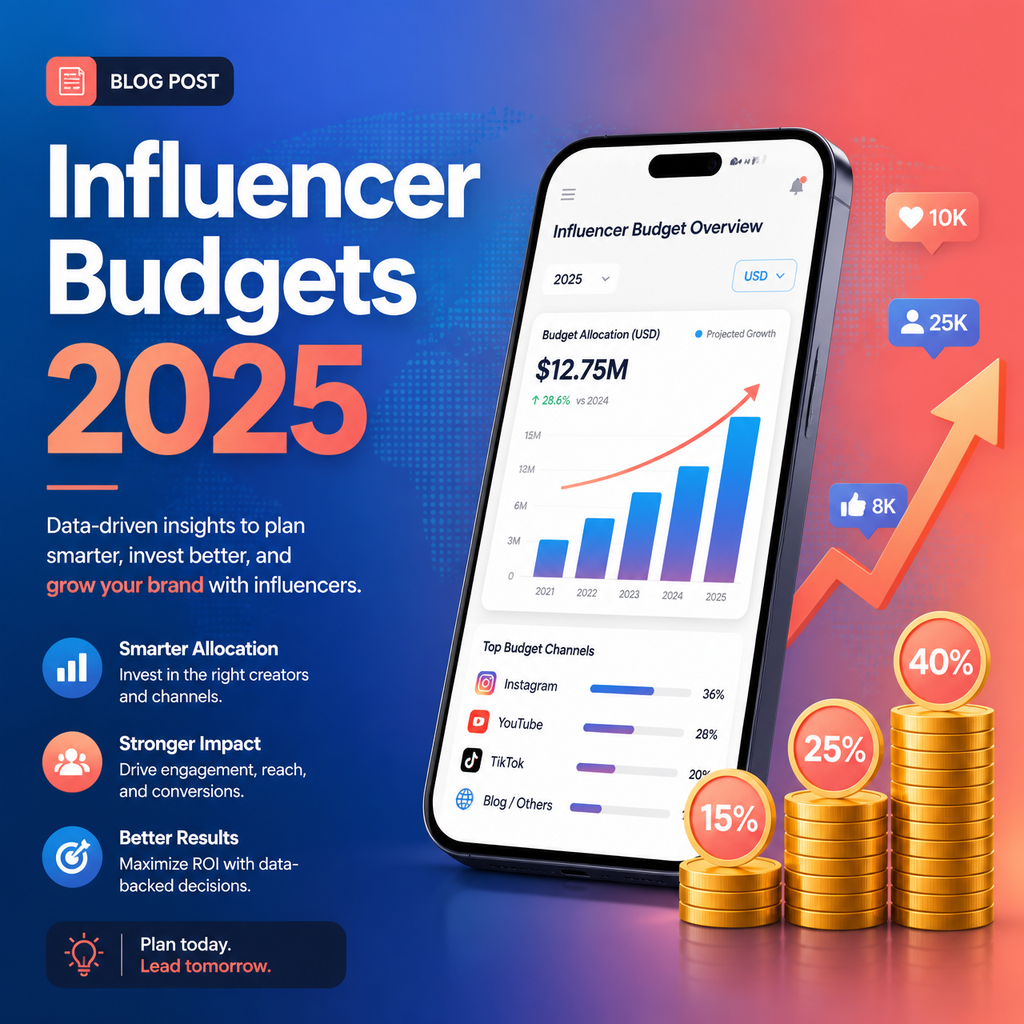
The 2025 Budget Snapshot: Where Influencer Marketing Stands
In 2025, influencer marketing has cemented its place in the marketing mix, with global spend projected to hit $32.55 billion. Yet, the way brands allocate budgets has shifted dramatically. According to a global survey, 14.4 percent of marketers now dedicate 10 to 15 percent of their total marketing budget to influencer collaborations, while nearly 12 percent commit over half of their budget to this channel. This recalibration reflects a broader trend: brands are moving from experimental spending to strategic, measured investment.
But what's driving this shift? Economic pressures, ROI scrutiny, and the rise of AI are forcing marketers to rethink their influencer strategies. The average share of ad spend on influencers now stands at 8.35%, a figure that has remained stable since 2020. However, the real story lies in how brands are optimizing their spend—prioritizing micro-creators, leveraging AI tools, and demanding clearer performance metrics.
Budget Allocation Trends: The 10-15% Sweet Spot
The most common budget allocation for influencer marketing in 2025 falls in the 10-15% range, with 14.4% of marketers opting for this level. This is followed closely by 5-10% (12.7%) and 15-20% (11.9%) allocations. This clustering indicates a 'sweet spot' where brands see meaningful ROI without overcommitting resources.
Interestingly, high-stakes investments (>50% of budget) are now rare, with only 11.9% of brands taking that leap—a sharp drop from 24.2% in 2024. This caution is a direct response to inflation and heightened ROI scrutiny. Brands are favoring smaller, targeted collaborations with micro and nano-influencers, who offer better engagement-to-cost ratios.
The Decline in Budget Growth Expectations
The percentage of brands planning to increase their influencer budgets fell to 49.2% in 2025, down from 59.4% in 2024. This 10.2% decline signals a more cautious outlook. However, 80% of brands either maintained or increased their budgets, with 47% raising them by 11% or more. This suggests that while growth is slowing, influencer marketing remains a core strategy.
ROI and Measurement: The New Imperative
Proving ROI is the top barrier for 63% of marketers in 2025. Despite better tools, only 25% can confidently link influencer campaigns to sales. This gap is driving a shift toward more rigorous tracking: 83% of brands now use custom links, coupon codes, and affiliate dashboards to measure performance.
Moreover, 50% of brands report that influencer marketing delivers better or equivalent ROI than digital performance ads. This is a powerful endorsement, but it also raises the bar. Brands are now tracking engagement quality, not just likes and comments, to ensure their spend drives real business outcomes. As a result, short-form video formats like Instagram Reels and TikTok are dominating, with Reels offering a $2.65 average cost per engagement.
The Rise of Micro and Mid-Tier Influencers
In 2025, 73% of brands prefer working with micro (10K-100K followers) and mid-tier (100K-500K) influencers. These creators offer the strongest engagement-to-cost ratio, making them ideal for brands looking to maximize ROI. Micro creators command a median CPM of $119, while nano creators can reach up to $211—but their engagement rates, often between 6.15% and 6.76%, justify the premium.
This shift is also reflected in spend patterns: annual influencer spend below $10K declined by 10.5%, while spend over $500K decreased by 3.5%. Brands are spreading their budgets across more, smaller collaborations rather than relying on a few big-name influencers. This approach not only reduces risk but also taps into niche audiences with higher trust and authenticity.
AI and the Future of Influencer Marketing
AI is no longer optional—92% of brands are already using or open to using AI tools in their influencer marketing workflows. From identifying the right creators to predicting campaign performance, AI is streamlining processes and reducing guesswork. In 2025, AI is helping brands optimize budgets by analyzing engagement data, forecasting ROI, and even creating virtual influencers.
However, AI is not replacing human creativity. As the industry matures, the focus is on blending AI efficiency with human-centric storytelling. Brands are investing in AI to handle data, but they're relying on creators for authentic content that resonates. This hybrid approach is key to navigating the complexities of 2025 and beyond.
Navigating Economic Pressures with Strategic Allocation
Economic uncertainties have forced brands to be more deliberate with their influencer budgets. The decrease in dedicated budgets—from 85.8% in 2024 to 75.6% in 2025—reflects this caution. Yet, influencer marketing remains a vital channel, with 63.8% of brands planning to partner with influencers this year. The key is to allocate budgets wisely: focusing on micro-influencers, leveraging AI for efficiency, and tracking ROI meticulously.
As we look ahead, the influencer marketing landscape will continue to evolve. Brands that thrive will be those that adapt to these trends—embracing data-driven strategies, nurturing authentic partnerships, and staying agile in the face of change. The 2025 data makes it clear: influencer marketing isn't just here to stay; it's becoming smarter, more accountable, and more integrated into the broader marketing ecosystem.